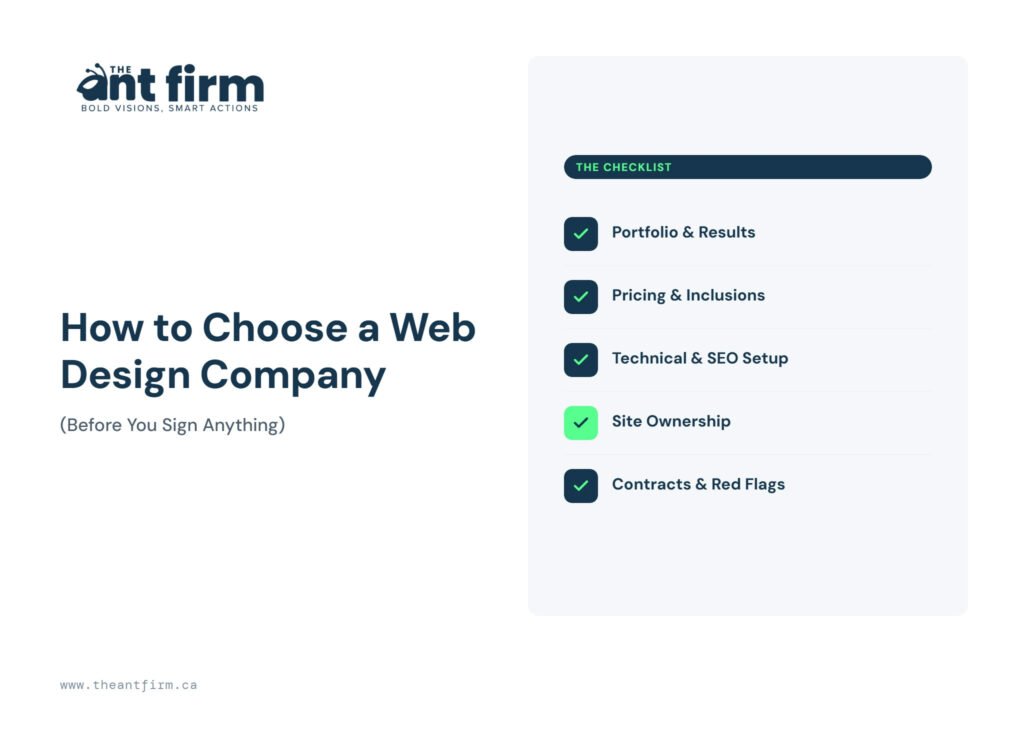
TL;DR: If you want to know how to choose a web design company, focus on four things before you sign anything: their past work and results (not just screenshots), what the price actually includes, their technical and SEO setup, and who owns the finished website when it’s done. Ownership is the one most guides skip, so confirm it in writing before you get into the pricing conversation, not after you sign.
Knowing how to choose a web design company matters most on the day you try to leave one. You’re ready to move on, and that’s when you find out you don’t actually own the website, so switching agencies turns into a negotiation over your own domain, content, or code.
So how do you choose a web design company the right way? Start by looking past a polished portfolio. Ask what the price includes, who handles SEO, what support you get, and, most importantly, who owns the finished website. If you’re still deciding between a builder and hiring an agency, our guide to the best website builder for small business can help you compare your options first.
What to Look for in a Web Design Company: The Checklist
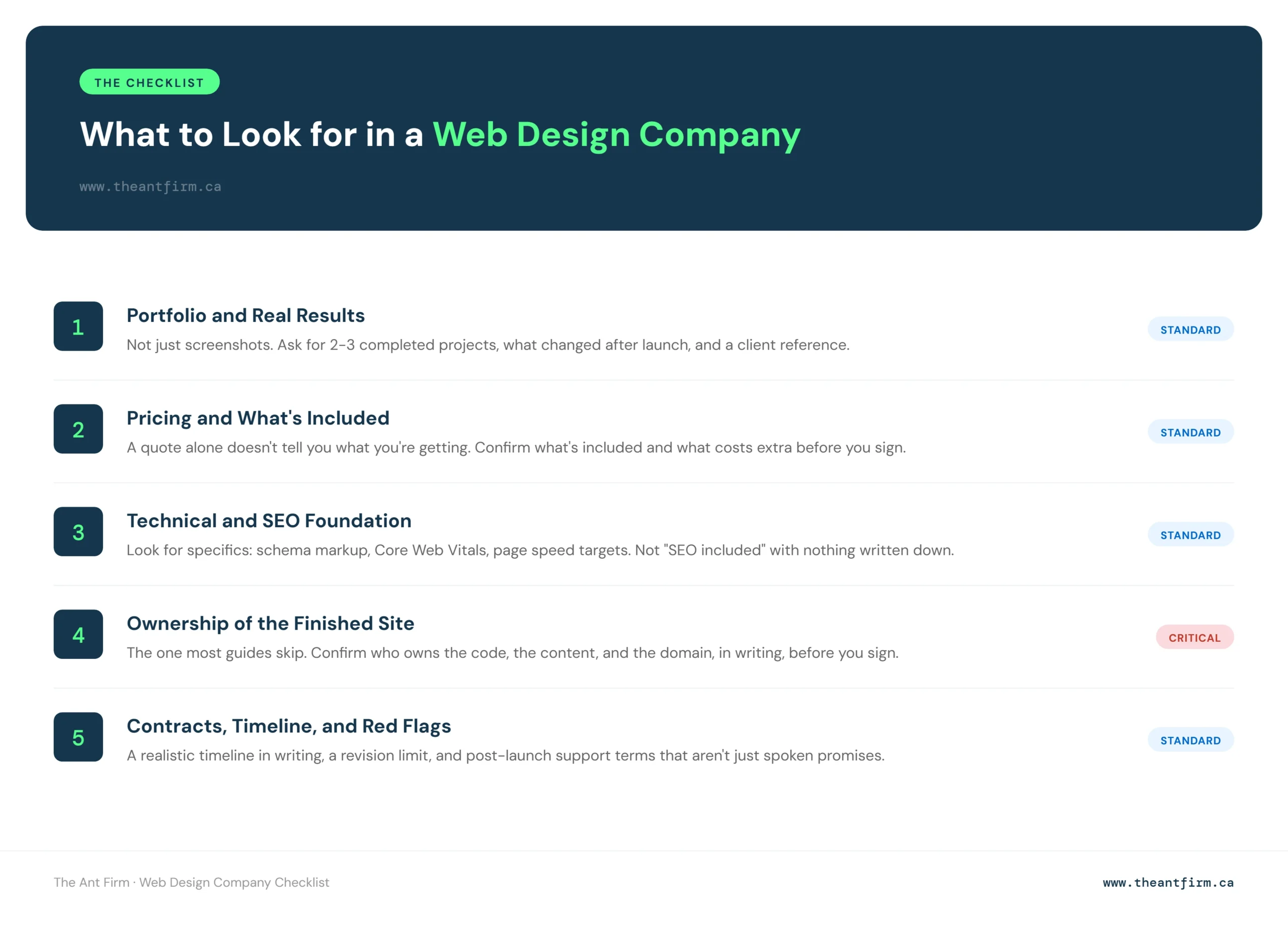
Here’s what actually matters when you evaluate a web design company:
- Real portfolio results, not just screenshots
- Transparent pricing and what it includes
- A technical and SEO foundation, not just a promise
- Who owns the site after it launches
- Contracts, timelines, and clear red flags
Most web design guides focus on just a few of these, usually portfolios and interview questions, and leave out pricing, contracts, and ownership entirely. If you want to know how to choose a good web design company, look past the usual questions. A company can have an impressive portfolio and still leave you unclear on what you’ll pay, what you’ll receive, or who owns the finished website.
You should also check how the company works after the project starts. Ask about communication, timelines, revisions, ongoing support, and what happens when you need changes later. These details affect your experience just as much as the design itself.
This checklist breaks down the five areas to check before you hire a web design company. Start with the first thing most people look at: the portfolio.
Portfolio and Real Results, Not Just Screenshots
A portfolio can look impressive while telling you very little about how a web design company actually works. Polished screenshots show the design, but they don’t show you how the site performed after launch or what the client gained from it.
Look for Real Projects
Ask the company to show you two or three completed projects similar to your business. This gives you a better idea of whether they can handle your type of website and understand your audience.
Ask About Results
Don’t stop at the design. Ask what changed after each website launched. Did traffic increase? Did the client get more leads? Did sales improve? These results give you a much better idea of what the company can actually deliver.
Speak to Past Clients
If possible, ask for a client reference. Speaking with someone who has worked with the company can tell you about communication, deadlines, support, and the overall experience, and help you avoid surprises later.
Test the Live Websites
Visit the websites listed in the portfolio instead of only looking at screenshots. Open them on your phone and computer. Check how quickly they load, click through the pages, and see if everything works properly. A polished screenshot doesn’t show any of that.
Look at More Than Design
A good website needs to work well, not just look good. Check the navigation, mobile experience, page speed, content structure, and overall usability. These details tell you much more about how to choose a web design company than the homepage screenshot ever will.
You can also visit real examples of what a completed build looks like on The Ant Firm’s own portfolio, along with the results behind each project.
Pricing and What’s Actually Included
Price alone doesn’t tell you what you’re getting. Two companies can quote the same number and offer very different services. Clear pricing is a core part of how to choose a web design company, because extra costs often surface after you sign the contract, not before.
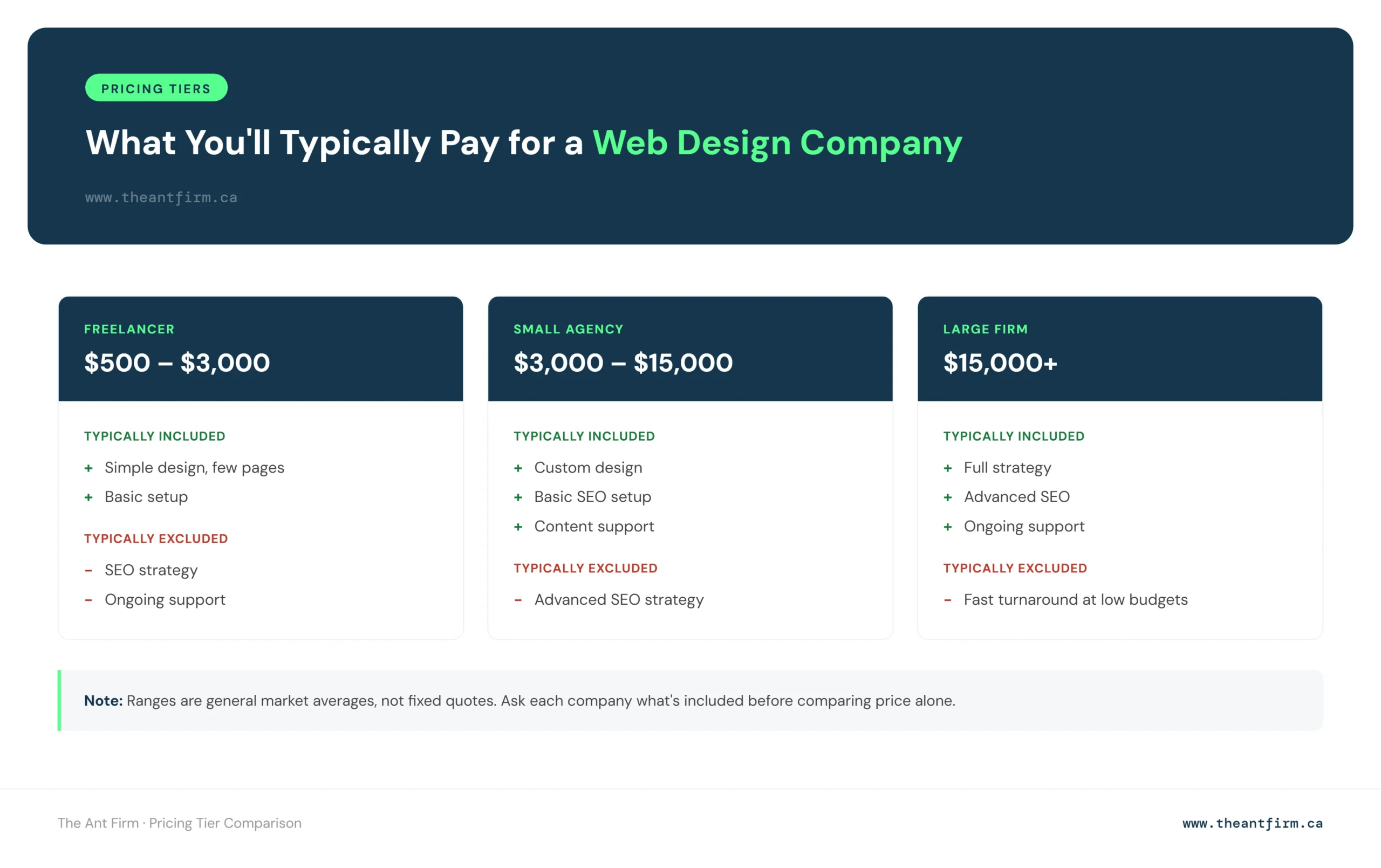
Here’s a general sense of what businesses typically pay:
| Type | General Price Range | What’s Usually Included |
|---|---|---|
| Freelancer | $500–$3,000 | A simple design, a handful of pages, basic setup |
| Small agency | $3,000–$15,000 | Custom design, some SEO setup, content support |
| Large firm | $15,000+ | Full strategy, advanced SEO, ongoing support |
Ask each company what’s included in the quote. Check whether revisions, basic SEO setup, and training are part of the price or charged separately. A clear breakdown helps you understand the full cost and avoid surprise charges once the project begins.
For a full cost breakdown built around what a custom build actually costs in the Toronto market, see our dedicated pricing guide.
Technical and SEO Foundation
A website that looks good but can’t be found doesn’t help your business. When you review proposals, look for specific technical details, not vague promises.
Does the proposal mention schema markup? Does it name Core Web Vitals or page speed targets? Or does it just say “SEO included” with nothing written down beyond that? Vague language here is one of the clearest signs of a company that builds templates and calls it strategy.
Ask how the company structures page titles, headings, and image tags. Ask if the site will be mobile friendly by default, not added on later. These are checkable details, not promises you have to take on faith.
The technical setup is often the most overlooked part of how to choose a web design company, since it rarely shows up in a portfolio screenshot. A company that can explain these details clearly, without hiding behind jargon, is one that actually understands the job.
Ownership: Who Owns the Site When It’s Done
Ownership is the step most guides forget when they explain how to choose a web design company, and it’s the step that matters most when you actually try to leave.
Three Things to Confirm in Writing
Before you agree to anything, confirm three things in writing:
- Who owns the source code
- Who owns the content, meaning the words, images, and copy written for the site
- Who controls the domain registration and hosting account
Some agencies register the domain in their own name instead of the client’s. It may not seem like a big issue at first, but it can become a serious problem if you decide to move to another agency. You could end up fighting to regain access to a domain that represents your own business.
Always ask who will own the domain, website, content, and code before signing a contract. Don’t assume these details are included.
At The Ant Firm, our flat fee builds give clients full ownership of their finished WordPress website. There are no lock in fees or extra charges if you decide to leave.
Every agency may have its own process, but you should know exactly what you own before the project begins. If you’re comparing WordPress agencies specifically, our guide to the deeper WordPress-specific questions to ask covers ownership and other technical details.
Contracts, Timeline, and Red Flags
A clear contract protects both you and the web design company. Without one, you may face confusion about the work, deadlines, or payment. Ask for a realistic timeline in writing instead of relying on a rough estimate.
A simple brochure website may take a few weeks, while a larger custom site can take a couple of months. Promises of a finished website in just a few days should make you cautious.
Red Flags to Watch For
- It takes three or more days to get a reply to a simple question
- The proposal has no written limit on the number of revisions
- Post launch support is mentioned out loud but never written down
- The company avoids naming who will actually work on your project
None of these alone means you should walk away. But two or three together form a pattern, and patterns during the sales process tend to repeat after you sign. Contracts and red flags round out how to choose a web design company, once the interview stage is done.
Frequently Asked Questions
How much should I expect to pay a web design company?
Pricing depends on the size and complexity of your project. A freelancer usually charges the least, a small agency sits in the middle, and a large firm charges the most for full service work. Rather than repeat every number here, our guide on web design cost in Toronto covers exact ranges and what pushes the price up or down.
What questions should I ask a web design company before hiring them?
The short list of questions to ask a web design company covers portfolio proof, what the price includes, technical and SEO specifics, who owns the site, and what the contract says about revisions and support. Each of these is covered in detail in the sections above, so treat this as a quick checklist before your first call.
Who owns my website after it’s built?
Ownership depends entirely on the contract. It isn’t automatic just because you paid for the site. Confirm three things in writing: who owns the source code, who owns the content, and whose name the domain is registered under. At The Ant Firm, the client owns everything outright after the project is complete. That’s one example of what a fair answer looks like, though it isn’t the only correct answer out there.
How long does it take to build a website?
The timeline depends on the size of the project. A simple business website may take a few weeks, while a custom website with more pages and features can take a few months. Ask for a clear timeline before the project starts and make sure it’s written into the contract.
What is included in a web design package?
This can vary from one company to another. Ask if the package includes design, development, SEO setup, content, revisions, hosting, maintenance, and support. Knowing what’s included from the start helps you avoid extra costs later.
How to Choose a Web Design Company: The Bottom Line
In the end, learning how to choose a web design company starts with knowing what you’re getting and who owns it. Check the portfolio, pricing, technical setup, contract, and support before signing. Most importantly, confirm who owns the finished website, the code, the content, and the domain.
Look beyond the homepage design and the sales pitch. Make sure the company gives you the control you need after the project is complete.
Shopping around in Scarborough? Here is how nine web design companies in Scarborough compare on price, services, and who each one is built for.
To see what a well planned website build looks like, explore what’s included in the build, or see how a build that gets this right works with our Toronto web design services.