
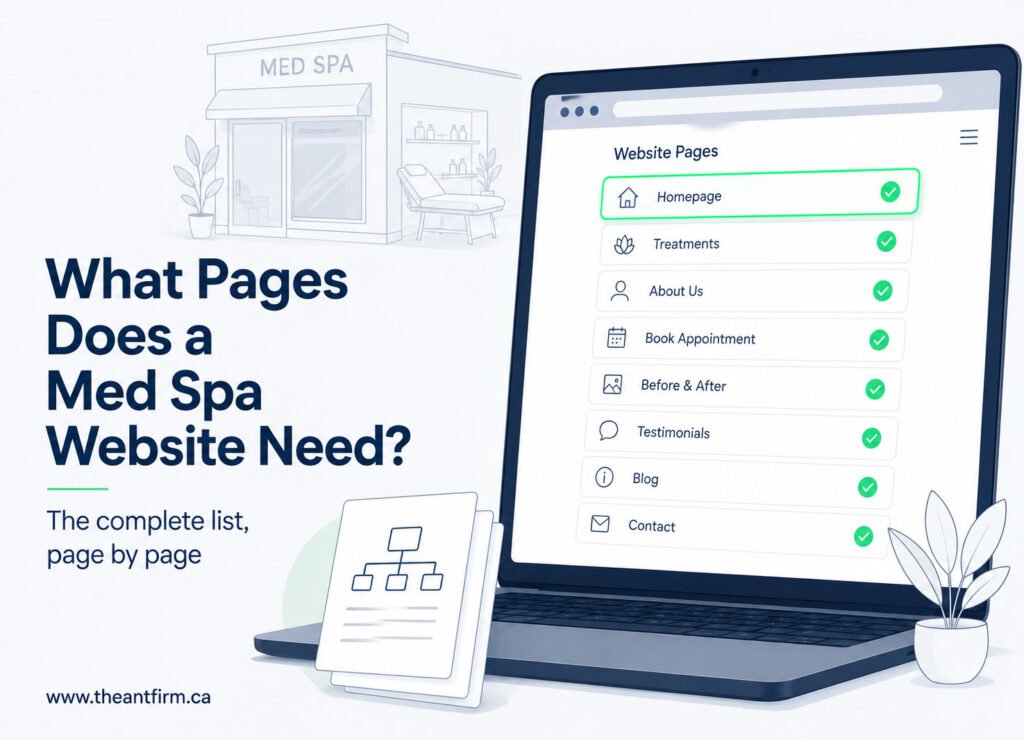
TL;DR If you’re asking what pages does a med spa website need, the honest answer is 14: a homepage, booking page, and contact page for the basics; individual treatment pages, a before-and-after gallery, an about/team page, a credentials page, and a reviews page to build trust; a transparent pricing page and a how-it-works page for the planning stage; and gift card, patient feedback, FAQ, and legal pages to round it out. Every page should map to a real reason a patient needs it — who you are, your qualifications, your results, or how to reach you.
A med spa website should answer questions, build trust, and make booking an appointment quick and easy. Missing the right pages can cost you potential patients without you even realizing it.
If you’ve been asking, “What pages does a med spa website need?” the answer goes beyond a homepage and a contact page. Every page should have a clear purpose and help visitors take the next step.
In this post, I’ll walk through the complete list of pages every med spa website should have, why each page matters, and how it can help you get more bookings from Google.
What Pages Does a Med Spa Website Need (And Why)
A med spa website should do more than look good. Every page should help visitors find the information they need and feel confident about choosing your business.
Start with a clear homepage that explains what you offer. Add service pages that describe each treatment, an about page that introduces your team, and a gallery to show real results.
Include pricing or consultation details, customer reviews, and a contact page that makes it easy to book an appointment. When every page has a purpose, visitors are more likely to trust your business and take the next step.
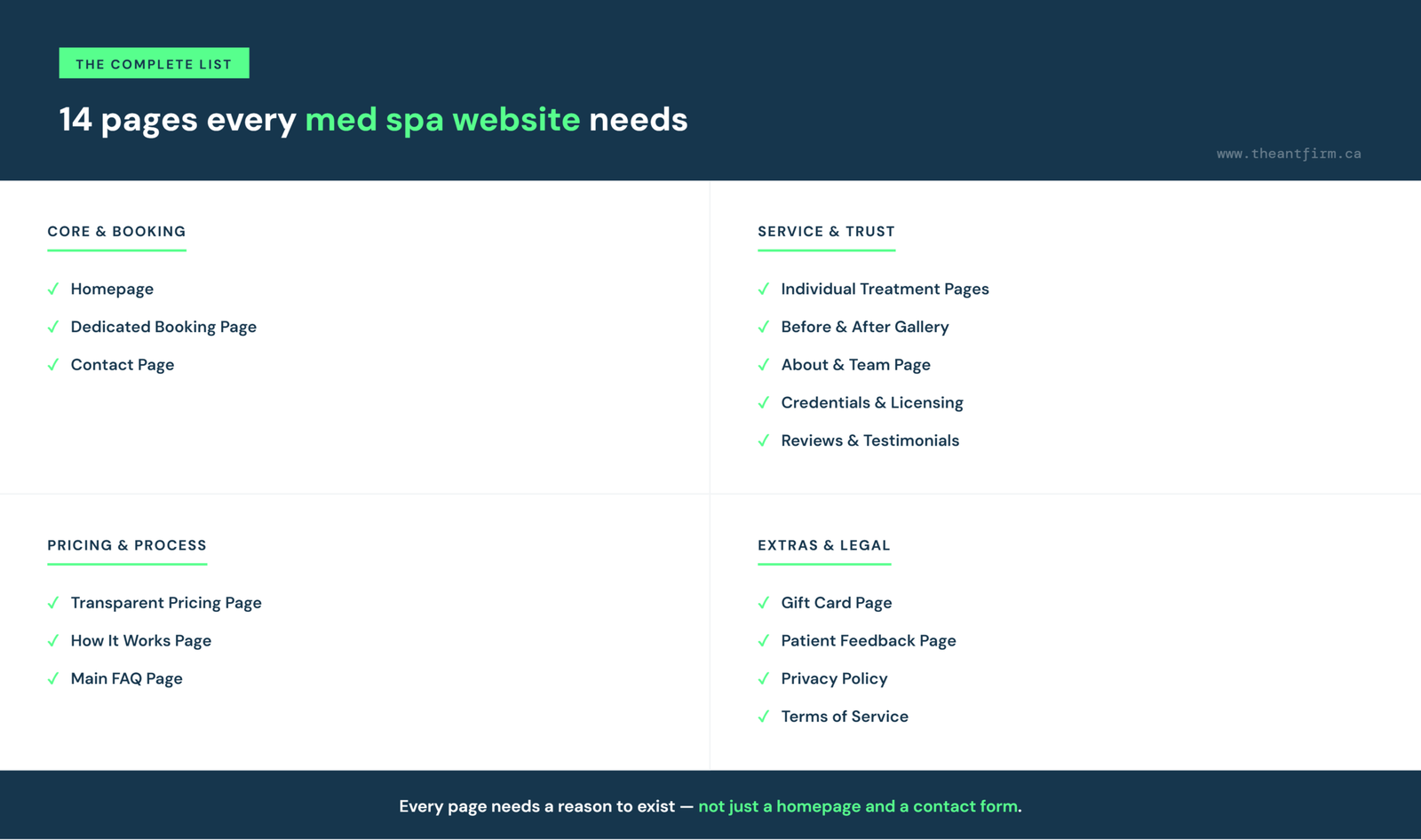
Core & Booking Pages
When you’re figuring out what pages a med spa website needs, start here.
Homepage
Your homepage should quickly tell visitors they are in the right place. Let them know who you are, what services you provide, and how they can book an appointment. Use real photos of your clinic, your team, and actual treatment results instead of generic images.
If you have positive reviews or professional certifications, include them to build trust. Keep your homepage clear and simple, and leave the detailed treatment information for your service pages.
Dedicated Booking Page
A contact page is important, but it shouldn’t be the only way people can book an appointment. When someone wants to book, they should be able to do it quickly. Add a separate booking page with an online calendar where visitors can choose their preferred time.
Also place booking buttons across your website so people can schedule an appointment easily from any page they visit. The fewer steps they take, the more likely they are to book.
Contact Page
Add your clinic address with a map so people can easily find you. Include real photos of your waiting area, treatment rooms, and team. Visitors want to see where they will be going before they book. These photos help build trust and show that your clinic is professional and well maintained.
The Pages That Prove You’re Worth The Money
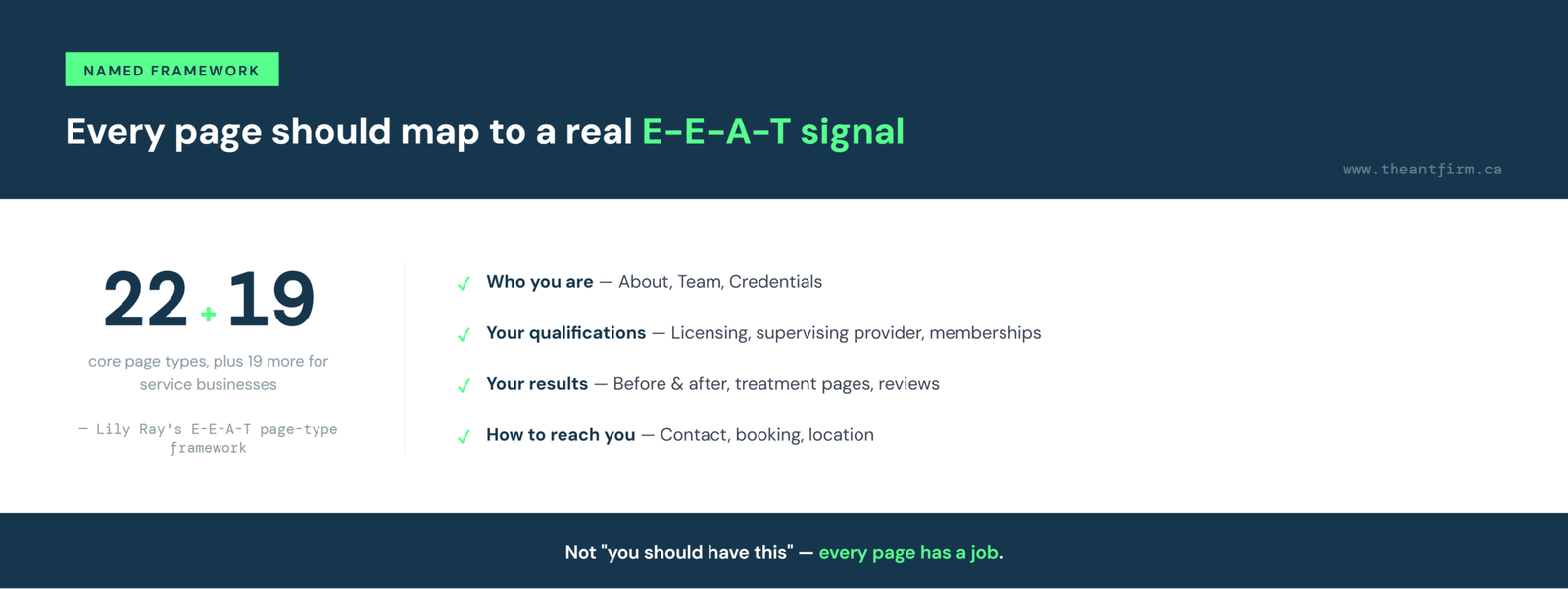
Now we’re getting to the pages that actually convince people to book. This is where Lily Ray’s E-E-A-T page-type framework is worth naming directly — it maps out 22 core page types every website needs, plus 19 more for service businesses, and every page below exists to prove who you are, your qualifications, your results, or how to reach you. Not just “you should have this.”
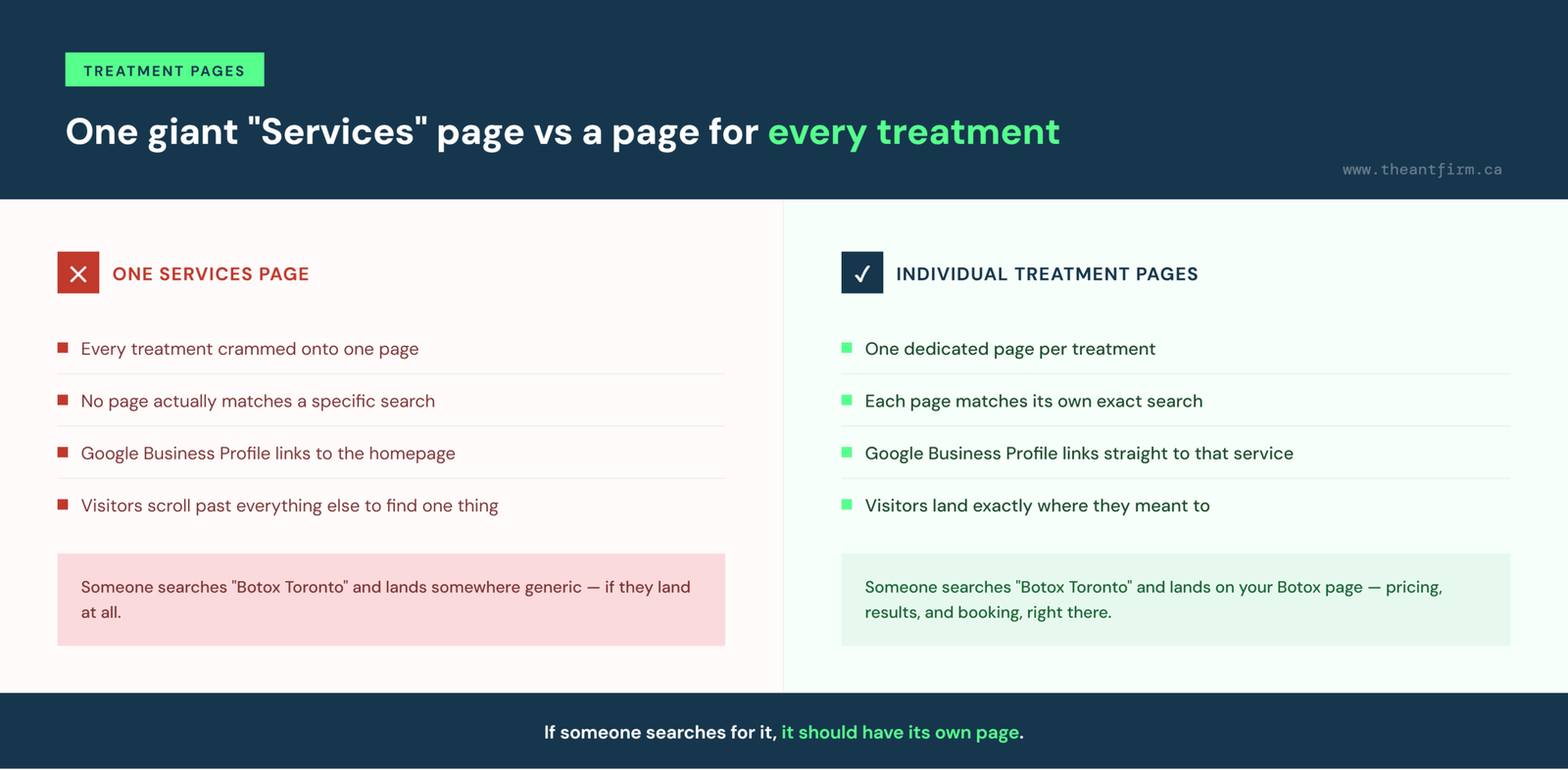
Individual Treatment Pages (Not One Massive Services List)
A common mistake is putting every treatment on one generic Services page. Instead, create a separate page for each treatment. If someone searches for Botox, they should land on your Botox page — the same logic that helps a Google Business Profile link straight to a specific service instead of just your homepage.
Include pricing, before and after photos, FAQs, and an easy way to book. This approach helps your website rank better in Google and makes it easier for people to find exactly what they need.
Before and After Gallery
Your before and after gallery can be one of the most convincing parts of your website. People want to see real results from real patients. Keep each treatment gallery separate, so Botox results stay with Botox and fillers stay with fillers.
Protect patient privacy if needed, but show the results clearly. Aim for six to twelve high quality examples for each treatment. A few great results are always better than lots of average ones.
About and Team Page
People want to know who will be performing their treatment. Use real names, photos, and qualifications for every provider. Share their experience and areas of expertise instead of keeping it generic.
For example, mention how many years they have worked and what treatments they specialize in. These details help people feel more confident and make them more comfortable booking an appointment.
Credentials and Licensing Page
A lot of med spas overlook this page, but it can make a big difference. Show who is licensed, who the supervising doctor is, and what certifications your team has. It helps people feel confident in your expertise before booking. It also adds credibility to your website and supports your visibility in Google search.
Reviews and Testimonials Page
Show your Google rating right there. Pull in a few real reviews with patient names. Let people read what actual patients experienced — and if you need help actually getting more of them, here’s how to get more reviews for your med spa. Social proof works. Period.
The Pricing and Process Pages (People Actually Want To See This)
If you’re deciding what pages a med spa website should have, don’t overlook these two.
Transparent Pricing Page
People want to know the cost before they contact you. Show clear prices or price ranges for your treatments. You can also include package deals. Being open about pricing helps people make a decision and encourages more bookings.
How It Works Page
New patients often feel unsure about what to expect. Explain the process step by step, from the consultation to the treatment, aftercare, and follow up. Keep it simple and add photos if possible. When people know what to expect, they feel more comfortable booking an appointment.
Other Pages That Actually Help
A few more pages worth adding to your med spa website:
Gift Card Page
People buy gift cards. Make it easy to get them. It’s real revenue you’re probably leaving on the table — put it in your menu and give it a dedicated page.
Patient Feedback Page
Give patients a way to tell you things directly. It shows you care about their experience, and it protects you because you’re tracking feedback. Win win.
FAQ Page
Beyond the FAQs on each treatment page, create a main FAQ page. Answer the questions everyone asks. What do I wear? When do I see results? Will there be bruising? Answer it all in one spot.
The Legal Pages (You Need These)
Every med spa website should include a Privacy Policy and Terms of Service page. These pages explain how you collect, use, and protect patient information while helping your business meet legal requirements.
If your website collects health-related information, make sure it follows Ontario’s PHIPA requirements, not just a generic privacy policy template. Having these pages in place builds trust with visitors and helps protect your business — we cover exactly what PHIPA compliance actually requires in more detail if you want the full breakdown.
Build a Med Spa Website That Brings More Bookings
If you’re asking what pages does a med spa website need, focus on the pages that help people make a decision. Start with your homepage, booking page, and contact page. Create a separate page for each treatment. Add before and after photos, pricing, your team, and clear information about the treatment process — that’s what good medspa website design actually looks like in practice.
When people quickly find the information they need, they are more likely to book an appointment. A simple and helpful website also gives your business a better chance of showing up in Google search results. The natural next question is what all of this actually costs to build — here’s a real breakdown of med spa website costs.
End Note
Finally, stop wondering what pages does a med spa website need and start building them. Focus on pages that answer your patients’ questions, build trust, and make booking simple. Keep your website clear, helpful, and easy to use.
Every improvement you make can bring you one step closer to getting more appointments. The sooner you get started, the sooner your website can begin working for your business.
Frequently Asked Questions
What pages should every website have?
At minimum, every website needs a homepage, a contact page, and pages that clearly explain what you offer. For a med spa specifically, that list gets longer — individual treatment pages, a booking page, and pages that build trust matter just as much as the basics.
What should a medical website include?
A medical or med spa website should include clear provider credentials, individual pages for each treatment, real patient results, transparent pricing where possible, and an easy way to book or ask a question. Trust signals matter more here than on a typical local business site.
What is legally required on a website?
Every website needs a Privacy Policy and Terms of Service page at minimum. If your med spa collects health-related information through forms or bookings, you’re also responsible for meeting Ontario’s PHIPA requirements around how that data is stored and protected.
How much does a healthcare website cost?
For a med spa or beauty clinic in Toronto, a properly built website with local SEO, a Google Business Profile connection, and the pages covered in this post typically runs $1,500 to $3,000.