Are you struggling with slow pages, and poor structure even though your website is a pretty website an built without SEO? Well, this happens because your website is not SEO optimized. Google and other search engines don’t see the beauty. They read code and text. Always remember that, search engines rank websites that help users, not websites that look impressive.
So, a design focused site will almost always lose to a site that has proper content and SEO, even if it looks plain. What to do then? Optimize your website with proper SEO.
In this blog, I will explain the top 13 reasons why a pretty website doesn’t get success. You will also learn why you should choose a SEO optimized website instead of a pretty website
So, let’s begin the discussion.
13 Reasons on Why Pretty Websites don’t Rank without SEO
Many people think a neat, colorful website will attract visitors on its own. In reality, without SEO, search engines cannot find or understand it.
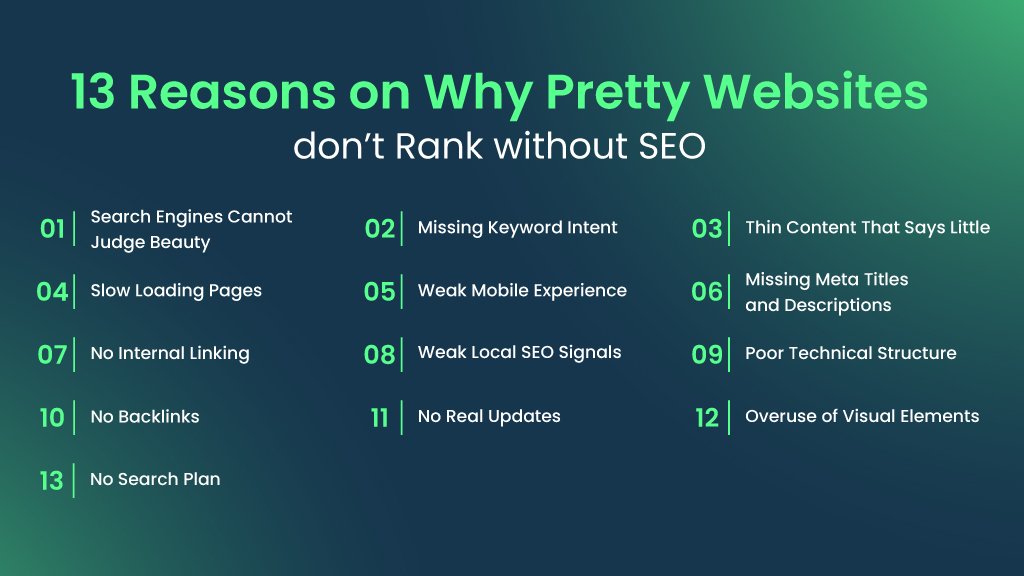
Let’s explore 13 thirteen reasons why design alone cannot make a site rank.
1. Search Engines Cannot Judge Beauty
Human eyes react to layout. Search engines read structure and text. When your design is the strongest part of your website but the content is thin, search engines read it as an empty shell. They cannot understand visual appeal and they cannot guess your purpose.
2. Missing Keyword Intent
People often focus on neat visuals and skip the terms people usually search for. Without clear keywords that match what users type into search bars, your content loses direction. Search engines cannot place your pages under the right topics and your visibility suffers.
3. Thin Content That Says Little
Some sites depend on short sentences or large photos because the owner wants a clean look. This creates a problem. Search engines need depth to understand the value behind your page. Without enough written content, your message stays hidden and your ranking struggles.
4. Slow Loading Pages
High quality images and heavy design elements can slow the entire site. Slow loading makes visitors leave early and search engines read that as a sign of poor experience. A fast site performs far better than a slow one filled with decorative elements.
5. Weak Mobile Experience
A design built for a wide screen can fall apart on mobile. Text can shrink, buttons can feel too small, images can stretch, and the page becomes hard to use. When mobile visitors leave quickly, search engines reduce your ranking because they assume the page is not useful.
6. Missing Meta Titles and Descriptions
These small pieces of information guide search engines. Many visually focused sites forget to add them. Without meta titles and descriptions, search engines struggle to understand or display your pages in search results.
7. No Internal Linking
Internal links help search engines move through your content with ease. Many site owners avoid adding links because they want the page to look clean. Without internal links, your pages feel disconnected and search engines cannot see the relation between them.
8. Weak Local SEO Signals
A pretty website alone cannot help people near you find your business. Without the right location information, local terms and a proper listing on search platforms, search engines cannot show your site to people in your area. This limits your reach even if the design looks refined.
9. Poor Technical Structure
Some sites sit on templates filled with messy code. Problems such as broken links, duplicate URLs or missing sitemaps confuse search engines. These issues block your path to better ranking. Good design cannot cover technical weakness.
Want the full picture in one place? Download the free infographic — it maps the entire local SEO framework visually.
10. No Backlinks
Design does not bring backlinks. People usually share content that helps them solve a problem or learn something. Without quality backlinks, your site does not build trust in the eyes of search engines. Trust plays a major role in ranking.
11. No Real Updates
A website can look polished on day one, but if no new content appears later, search engines start to treat it as inactive. Updates help your site stay relevant. When your pages stay the same for too long, search engines stop checking them.
12. Overuse of Visual Elements
Slideshows, animations and large galleries may feel visually pleasing but they often slow your website. They can also distract from the message you want to share. When search engines cannot find clear signals in your content, your visibility declines.
13. No Search Plan
Many pretty websites have no SEO plan at all. No keyword map. No content idea list. No regular posting routine. Without a plan the website moves without direction. SEO provides a roadmap that guides your growth and helps your content stay consistent.
Why Good Design Still Plays a Role
Design matters because it shapes the first impression. People should feel comfortable when they visit your website. Clean spacing, readable text and simple layout help visitors stay longer.
A well designed site supports your content, but it cannot stand on its own without SEO. Search engines reward clarity and value, not just visual polish.
What Happens When Design and SEO Work Together
When design and SEO sit together, your site becomes clear and organised. Visitors understand your message with ease and search engines can read your structure.
A proper balance helps your pages respond faster, look cleaner and show up for the right searches. This combination helps your website achieve stable growth rather than relying on appearance alone.
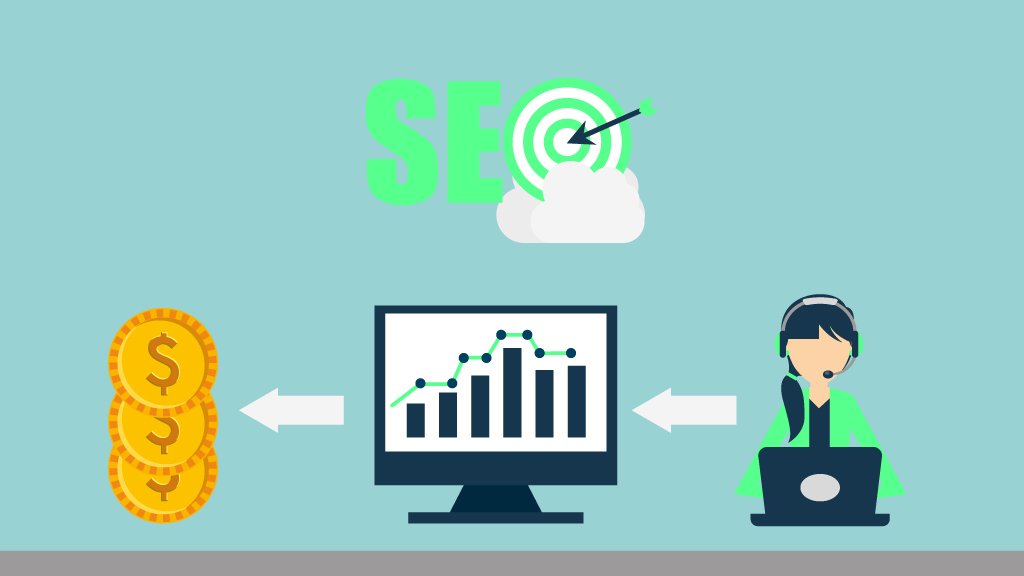
For example, a well written page with simple layout can outperform a visually rich page with no keyword focus. A page with strong internal links can outperform a glossy homepage with no clear direction.
A fast loading article can outrank a slow layout filled with large images. The winning result comes from a blend of design and strategy.
You Do Not Need a New Website
Many business owners assume their site needs a redesign when it does not rank. In most cases, design is not the problem. The problem is missing structure, missing content and missing SEO elements. When those are fixed, results improve fast.
You do not need a new site. You need a site built to be found. That is the real difference between a brochure website and a business website.
Want to Know If Your Website Is SEO Ready
If you want to see whether your current website is a simple brochure or a real search ready site, you can book a free website review call. You will get a clear explanation of what is missing and what needs improvement so your site can finally perform the way it should.
End Note
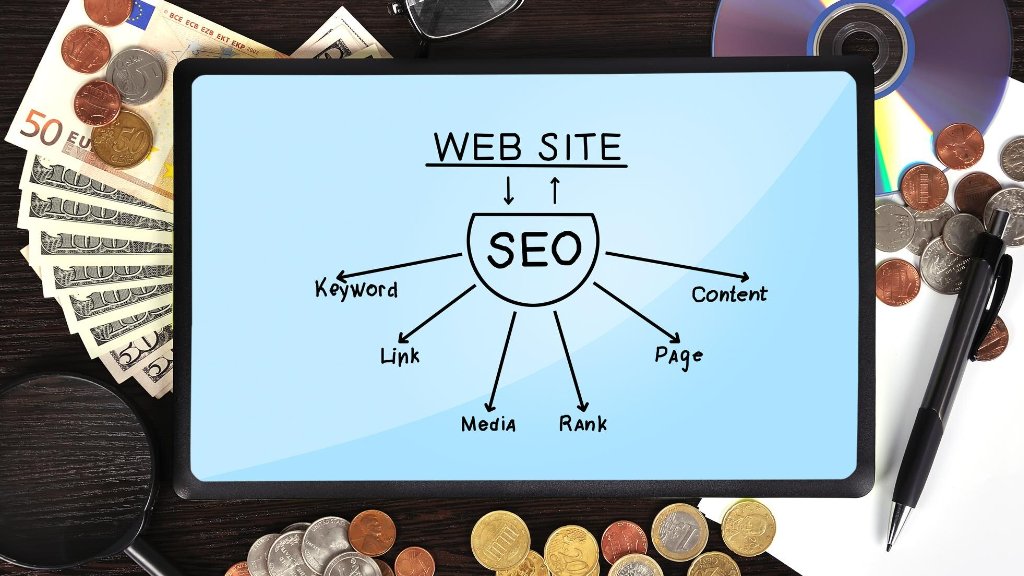
In the end, a pretty website alone does not make people find it. SEO helps your site get noticed, and design helps people trust it. Together, they make your website both visible and reliable.
A nice look for a website is not enough. Your site grows when search engines understand it, and design with SEO brings real visitors.
If you want the perfect locally optimized website for your business, contact The Ant Firm, LTD to get the best SEO optimized website.