
Are you not satisfied with your existing website? Don’t you get enough call or attention or reaching the target audience is difficult?
Most people decide online before they ever reach out. They search, scan a few pages, and trust their first impression. If a website feels messy or unfinished, they leave.
The issue here is that many local sites are built just to be online, not to bring in customers. They do not show up well in local search or clearly explain why someone should call.
In this blog, I will explain about the anatomy of a Local SEO-Optimized Website and show how the right structure turns visitors into real customers.
So, let’s begin the discussion.
What Is a Local SEO-Optimized Website?
A Local SEO-Optimized Website is designed for people searching for services in a specific area. It helps search engines understand where your business operates and helps visitors decide if you are the right choice.
This type of website focuses on clarity. It clearly shows what you do, where you do it, and how someone can contact you. Instead of trying to impress, it tries to be useful.
Local search depends on signals. Location, services, reviews, and business details all work together. When these signals are missing or weak, even a good-looking site struggles to bring traffic.
Read more: What is local first website?
The Main Goal of a Local SEO Website
A local website should guide visitors toward one clear action.
That action is usually a phone call, a form submission, or a booking request. Everything else supports that goal.

Problems start when a website tries to do too many things at once. Extra pages, mixed messages, and unclear calls to action slow people down. When visitors are unsure what to do next, they leave.
Each page should have one purpose. When that purpose is clear, results follow naturally.
Core Pages Every Local SEO-Optimized Website Needs
Local websites do not need dozens of pages. They need the right pages, written clearly.
The most important ones are:
- Homepage
- Service pages
- Location or service area pages
- About page
- Contact page
- Reviews or testimonials
Each page helps explain your business from a different angle. Together, they give search engines and visitors a full picture.
Learn more: SEO-Ready Websites: All You Need to Know
Why Local Businesses Need SEO-Optimized Websites
Local searches often come from people ready to act. They have not been researching for weeks. They want help now.

If your website does not clearly show that you offer the service they need in their area, they will contact someone else. Search engines notice this behavior too.
A Local SEO-Optimized Website helps your business appear in local results and gives visitors enough information to reach out without hesitation.
It also reduces the need to rely only on ads. When your site works properly, it brings steady traffic on its own.
The Navigation Menu for Local SEO-Optimized Website
The navigation menu should be simple and predictable.
For most local businesses, the menu should include:
- Services
- Service Areas or Locations
- About
- Reviews
- Contact
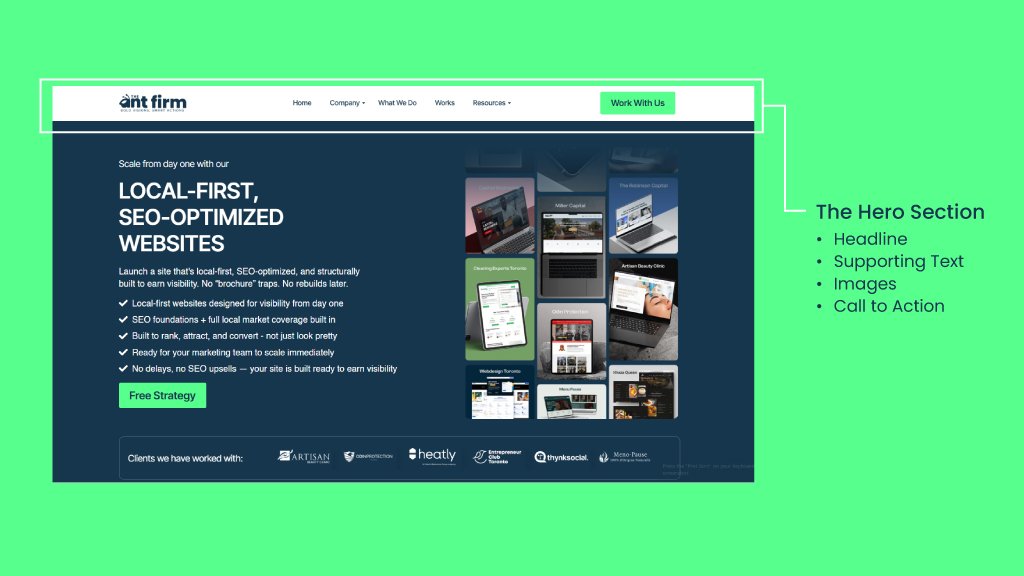
Adding too many options creates confusion. Visitors should not have to think about where to click.
The menu’s job is to help people reach contact pages and service information quickly. Anything that does not support that goal should be removed.
The Hero Section for Local SEO-Optimized Website
The hero section appears at the top of the page and sets expectations right away. It should answer three questions without forcing visitors to scroll.
- Who is this business
- What service do they offer
- Where do they offer it
If any of these points are unclear, people hesitate.
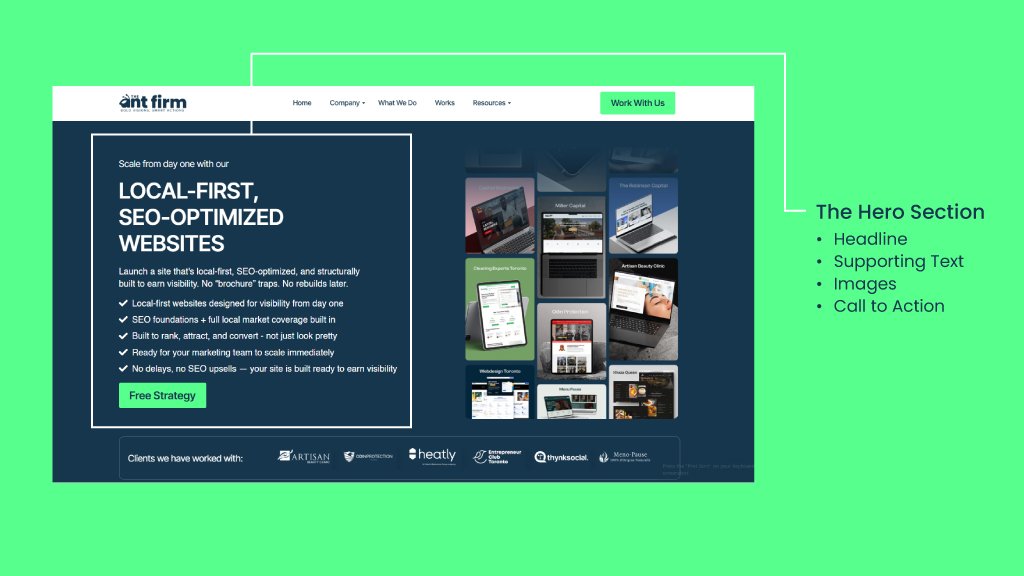
So, all you need you add:
Headline
The headline should clearly mention your main service and your location. This helps search engines and visitors at the same time. Avoid clever wording. Clear wording works better.
Supporting Text
Add one or two short lines that explain what customers get from working with you. Focus on outcomes people care about, such as fast service, experience, or local knowledge. Keep it short. This area is scanned, not read word by word.
Images
Use real photos whenever possible. Photos of your team, your work, or your location help people feel confident that your business is real and nearby.Generic stock photos often do the opposite.
Call to Action
Your main call to action should be easy to see and easy to understand. Call Now, Request a Quote, or Book an Appointment are clear choices. Avoid buttons that do not explain what happens next.
Contact Details Near the Top for Local SEO-Optimized Website
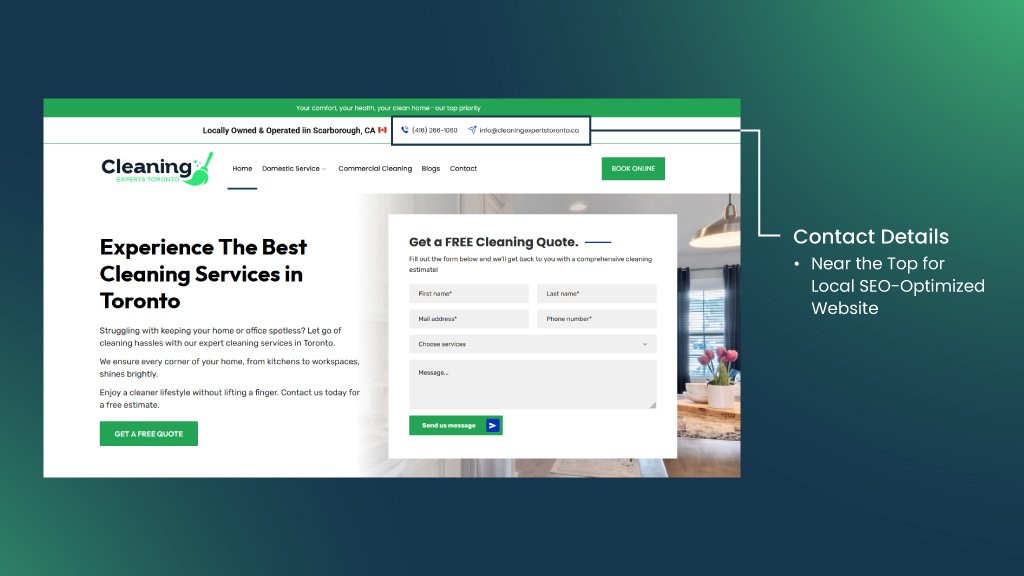
Local visitors often want to contact you right away. Make it easy.
Your phone number should be visible without scrolling, especially on mobile devices. Clickable phone numbers and simple contact buttons remove friction.
Hiding contact details is one of the most common mistakes on local websites.
The Services Section for Local SEO-Optimized Website
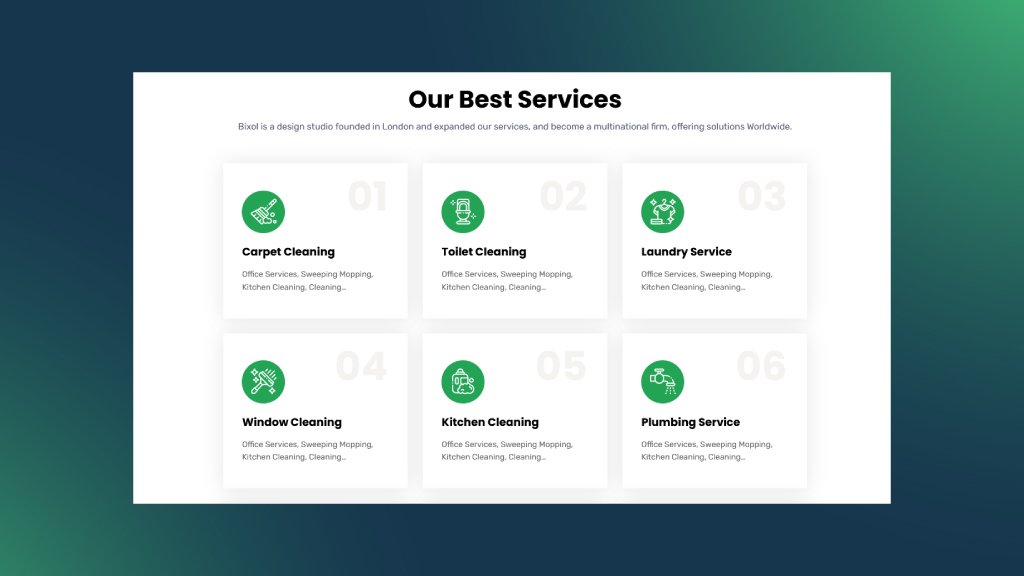
Your services section should explain what you offer in plain language.
List your main services and link each one to its own page. This helps search engines understand your business and gives visitors more detail when needed.
Do not focus only on technical features. Explain how each service helps solve a problem your customer is facing. Service pages play a major role in search performance.
This page explains how they work together with SEO
Clear Location Signals for Local SEO-Optimized Website
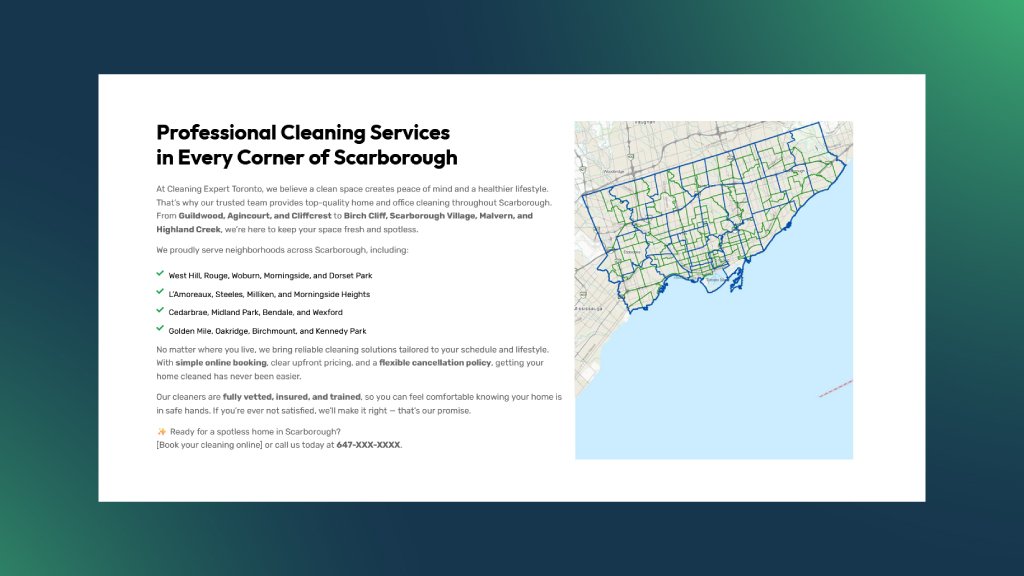
Search engines need to understand where your business operates. Your website should clearly mention:
- Cities or areas you serve
- Your physical location, if you have one
- Nearby communities relevant to your service
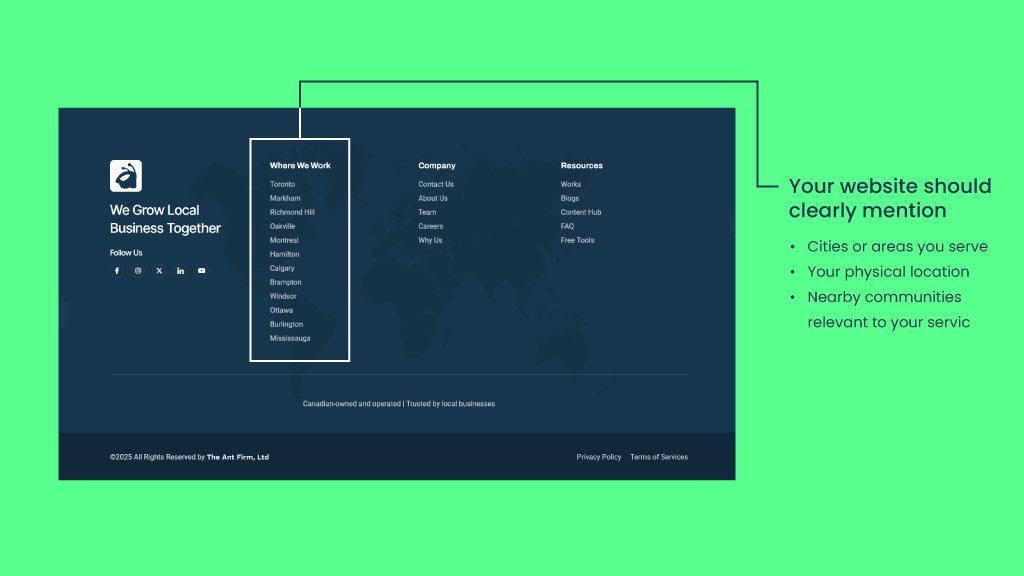
This information should feel natural within the content. Avoid long lists of cities without context.
Maps, service area sections, and location-based copy all help reinforce relevance.
Reviews and Customer Feedback Importance for Local SEO-Optimized Website
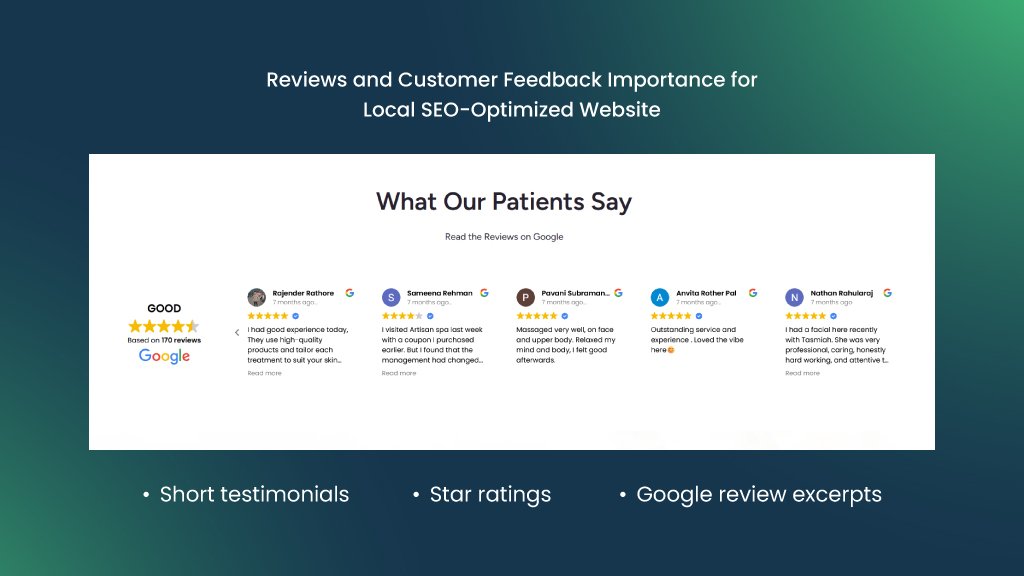
Reviews influence decisions quickly. Most people look for reassurance before reaching out.
Your website should include customer feedback in visible places, not buried on a single page.
Use:
- Short testimonials
- Star ratings
- Google review excerpts
Include names when possible. Real feedback builds confidence and reduces doubt.
The About Page for Local SEO-Optimized Website
The About page helps visitors understand who they are contacting.
This page should explain your background, your experience, and why you serve your local area. Write it in a straightforward way.
Photos of the owner or team help people feel comfortable making contact. This is especially important for service-based businesses.
The FAQ Section for Local SEO Optimized Website
FAQs help answer questions that stop people from taking action. So how this section should be like for for Local SEO Optimized Website
Common questions include pricing, timelines, service areas, and what happens after someone contacts you.

Placing FAQs near the bottom of service pages works well. By that point, visitors understand your service and are deciding whether to reach out.
Community and Local Credibility for Local SEO-Optimized Website
Reviews matter, but they are not the only trust signal.Local credibility also comes from showing that your business is active in the community.
This can include:
- Business licenses
- Local certifications
- Memberships in associations
- Community involvement or sponsorships
Mentioning these details helps both search engines and visitors understand that your business operates locally and legitimately.
Content Still Matters for Local SEO-Optimized Website
Design helps people stay on a page, but content explains why they should contact you.
Local SEO content should be clear, direct, and useful. Avoid filler. Short paragraphs and clear headings make pages easier to read.

Each page should support one goal and one message. Ensure that you learn about the website content strategy to fit into long-term search performance.
End Note
A Local SEO-Optimized Website helps people find your business, understand your services, and contact you without friction.
If your website is not bringing calls or inquiries, it is missing key elements covered in this guide.
At The Ant Firm, LTD, we help local businesses build websites that are structured for search and written for real customers.
If you want to know what is holding your site back, schedule a strategy call with our team. We will review your website and explain what needs to change and why.

Local customers are already searching. Your website should be ready when they do.