
Are patients having trouble finding your clinic online, even though you have a website? Medical clinic website SEO helps your clinic show up in search results from day one.
New clinics often launch a website and wait for patient calls but then wonder why traffic is slow. Google does not know your clinic exists yet, and without proper SEO, your site can stay invisible to people looking for care nearby.
Planning service pages, local SEO, and technical setup before launch helps your website reach patients quickly and build trust even before they visit.
In this blog, I will explain the reasons why a medical clinic’s website SEO starts before day one.
Let’s begin the discussion.
Why Google Has No Idea Your Clinic Exists Yet
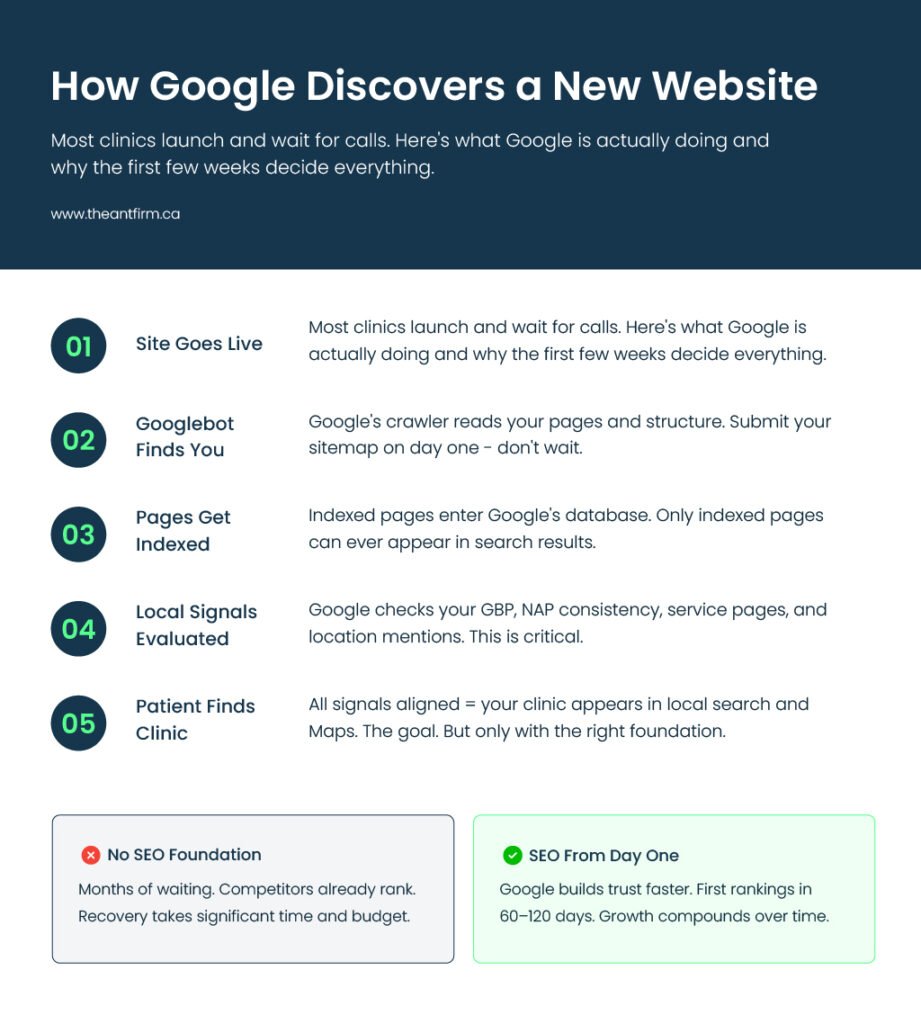
Google does not automatically know about new websites. It uses crawlers to explore the internet, indexing pages and evaluating relevance and authority. For a new clinic, there is no history. No one has linked to your website. There are no reviews, no local signals, and no content showing what your clinic offers.
Domain age, structured content, and early technical setup all influence how quickly Google learns about your site. Without these signals, your website may stay invisible even if patients in your city search for your services.
Understanding this early helps you plan. You are not competing only with clinics that opened last year. You are competing with every established clinic in your city that already has local SEO in place.
How Patients Find Clinics Online
Most patients start looking for medical care on Google, usually from their phones. They want quick answers and a clinic close to them. Some common searches include:
- “Walk-in clinic near me”
- “Family doctor in Scarborough”
- “Pediatric clinic in Toronto”
People check Google first, and also sites like Healthline or ask friends. If your website isn’t ready from day one, you could lose patients.
A website does more than show up in search. It helps patients find the information they need quickly, like:
- Clinic hours and location
- Services you offer
- Contact information and booking options
- Reviews from other patients
Google also looks at these details. An organized website shows both Google and patients that your clinic is trustworthy. This can help your clinic appear higher in local searches and maps.
Starting SEO from day one gives your clinic a strong head start. It helps you:
- Reach patients who are searching for care right away
- Build trust with Google and potential patients
- Lay the groundwork for long-term visibility in your area
3 Mistakes That Keep New Clinic Websites Off Google
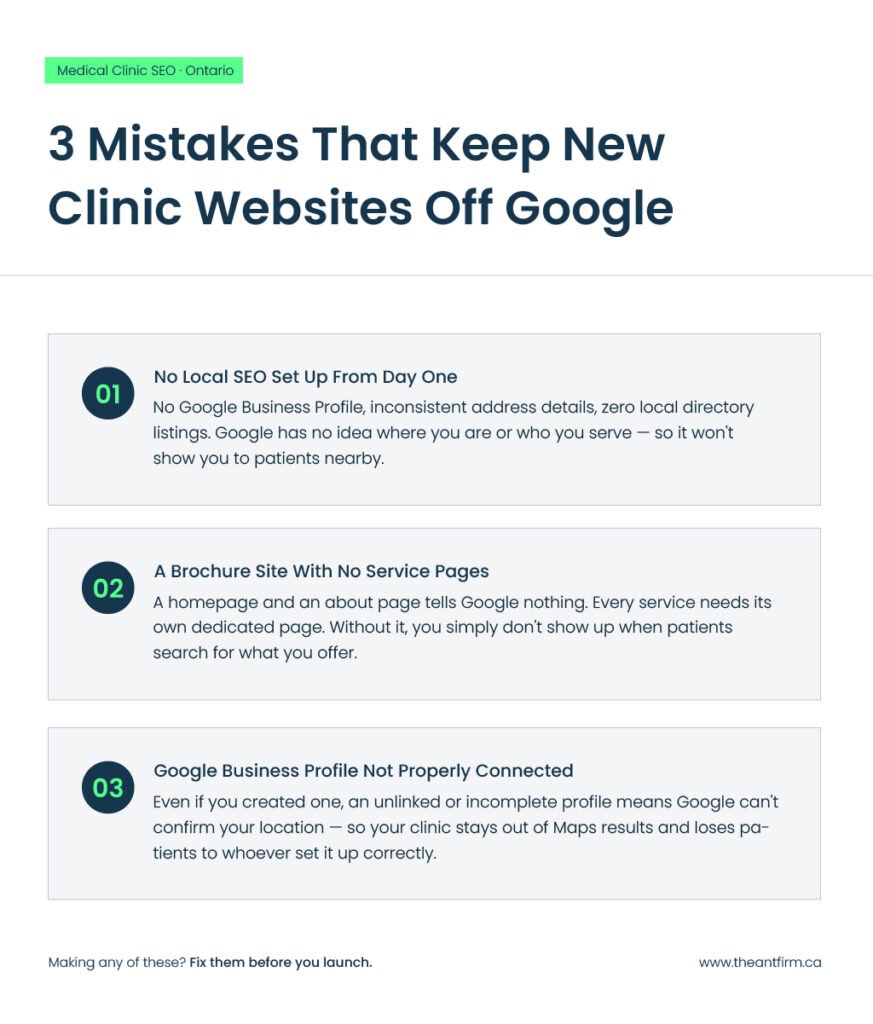
Many new clinics make the same early errors:
Mistake 1: No local SEO set up
Many new clinics forget to tell Google where they are and who they serve. Without a properly set up Google Business Profile, consistent Name, Address, and Phone details, and local listings on trusted directories, your clinic may never appear in map results.
Patients searching for nearby care will see other clinics first. Local SEO helps Google understand your location and the services you provide so patients can find your clinic easily.
Mistake 2: A brochure-style website with no service pages
Some clinics create a website with only a homepage and an about page. It may look good, but Google gets very little information about your clinic. Service pages are important because they show what your clinic offers, like vaccinations, lab tests, family check-ups, or pediatric care.
Each service should have its own page with clear details. This helps Google understand your clinic and gives patients the information they need to choose your clinic with confidence.
Mistake 3: Google Business Profile not linked properly
Even if you create a Google Business Profile, it will not help much if it is not connected to your website. Without this connection, Google cannot fully trust your location or the services you provide.
Updating your profile with hours, services, photos, and reviews builds credibility. A complete and linked profile improves your chances of showing up in local searches, maps, and mobile results. This helps patients find your clinic before they see other options in your area.
What a Clinic Website Built for SEO Actually Looks Like
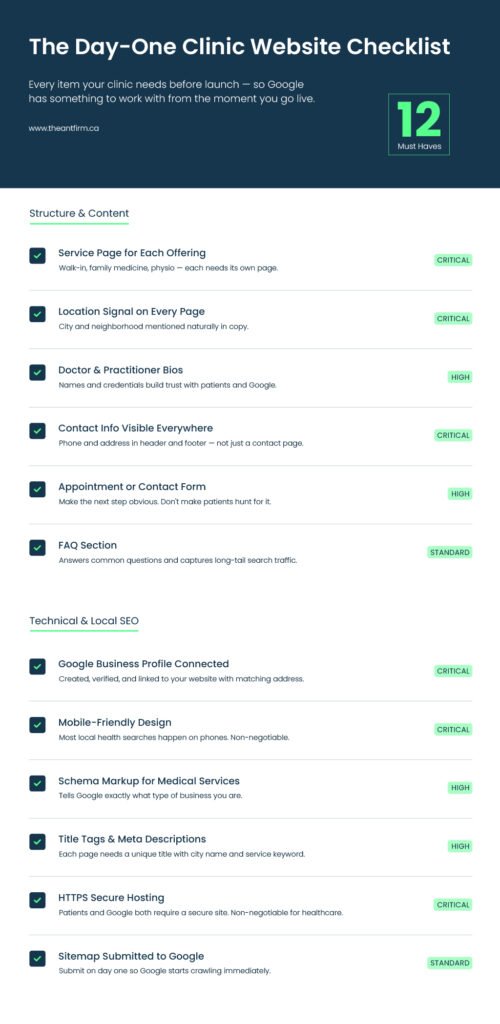
A proper medical website structure gives Google signals from day one. It also gives patients confidence in your clinic before they call or visit. Google and patients must understand it clearly. Key elements include the following:
- Service pages for each offering: family medicine, walk-in visits, physiotherapy, etc.
- Location pages with the city and neighborhood name to signal relevance.
- Doctor or practitioner bios with credentials and experience.
- Visible contact details on every page: phone number, email, and address.
- Google Business Profile link and social proof.
- Schema markup for medical services to make Google understand your content better.
- Appointment booking or contact forms for easy patient inquiries.
- Clear explanations of insurance accepted and payment options.
- Patient testimonials or reviews to build trust and credibility.
- FAQ sections addressing common patient questions.
- Mobile-friendly design for easy access on phones and tablets.
- Blog or educational content to provide helpful information and improve search visibility.
The 90-Day Window Google Uses to Judge Your Clinic
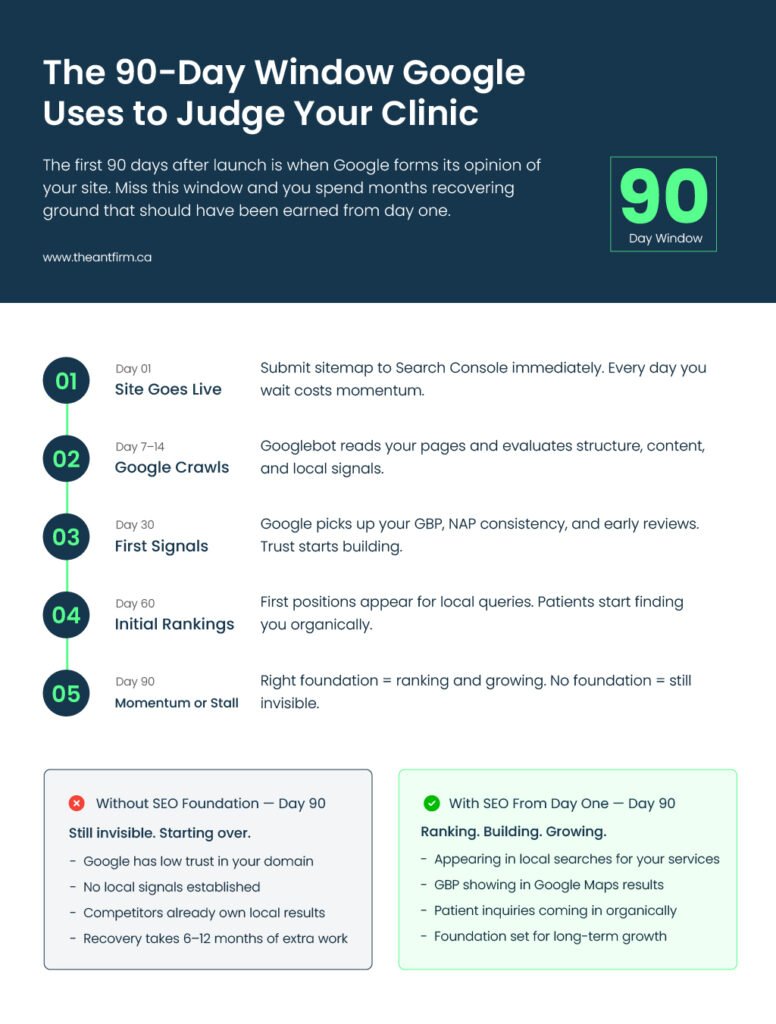
Google forms its first impression of your website in the first 90 days. What happens during this time affects how fast your clinic shows up in search results. Missing it can delay results for months, and it will take time to rank on Google locally.
During this time, Google evaluates several important factors to understand and rank your clinic:
- Domain signals and trust: Google looks at how long your website has been active, the quality of any backlinks, and if your clinic is recognized as a legitimate business online. Older, verified domains often get a head start.
- Page content relevance: Each page should clearly show the services you offer. Google looks for content that answers what patients are searching for, like family medicine or physiotherapy. Well-organized service pages help your clinic appear in relevant searches and improve your website’s SEO.
- Local SEO signals: Your Google Business Profile, consistent Name, Address, and Phone details, and local citations all signal to Google where your clinic operates. Accurate local information ensures your clinic appears in maps and local search results.
- Technical performance: Fast loading pages, mobile-friendly design, and proper site structure make it easier for Google to crawl and index your site. Slow or poorly designed sites can hurt your rankings even if your content is good.
- User engagement: Google monitors how visitors interact with your website. Clear navigation, easy-to-find contact information, and appointment booking options help keep visitors engaged and signal value to Google.
Domain Setup and Hosting Matters for Medical Clinic Website SEO
Your domain choice is more than branding. Google pays attention to new domains. A name that reflects your clinic and location signals relevance. Connecting your domain to Google Search Console before launch helps Google index your website faster.
Ensure that you should also take care of basic technical parts of your website. Use HTTPS, simple URLs, and make pages easy to use. Broken links, missing meta tags, or large images can slow down Google from finding your site.
A good domain and hosting setup makes all your other SEO work easier. When your site is ready, service pages, doctor bios, and blog posts can show up in search faster. Fixing these things from day one helps patients find your clinic and trust your website.
Content Planning for Medical Clinic Website SEO Before Launch
Content is a signal to Google and a tool for patients. Planning before your site goes live ensures every page has a purpose.
- Homepage: Provides a clear overview of your clinic, services, and location. First impressions matter, and Google uses this page to understand your clinic.
- Service pages: Each service should have its own page with detailed descriptions, benefits, and what patients can expect. This helps Google match your clinic to relevant searches.
- FAQ pages: Answer common patient questions, like appointment booking, insurance, or clinic hours. FAQ pages can also capture long-tail search traffic.
- Blog posts: Create educational content about health topics and local issues. Blogs increase your online presence, improve search rankings, and give patients useful information.
This approach ensures your website is meaningful from day one. It supports medical clinic online visibility, and gives patients reasons to trust your clinic.
Technical Foundations for Medical Clinic Website SEO
Technical SEO can make or break early results. Checklists include:
- Mobile-friendly layout
- Page speed optimization
- Internal linking structure
- Schema markup for medical services
- Secure HTTPS hosting
Google notices these signals. Sites that are technically sound from day one gain trust faster, which helps your medical clinic website SEO succeed in the first months.
Local Citations and Reviews for Medical Clinic Website SEO
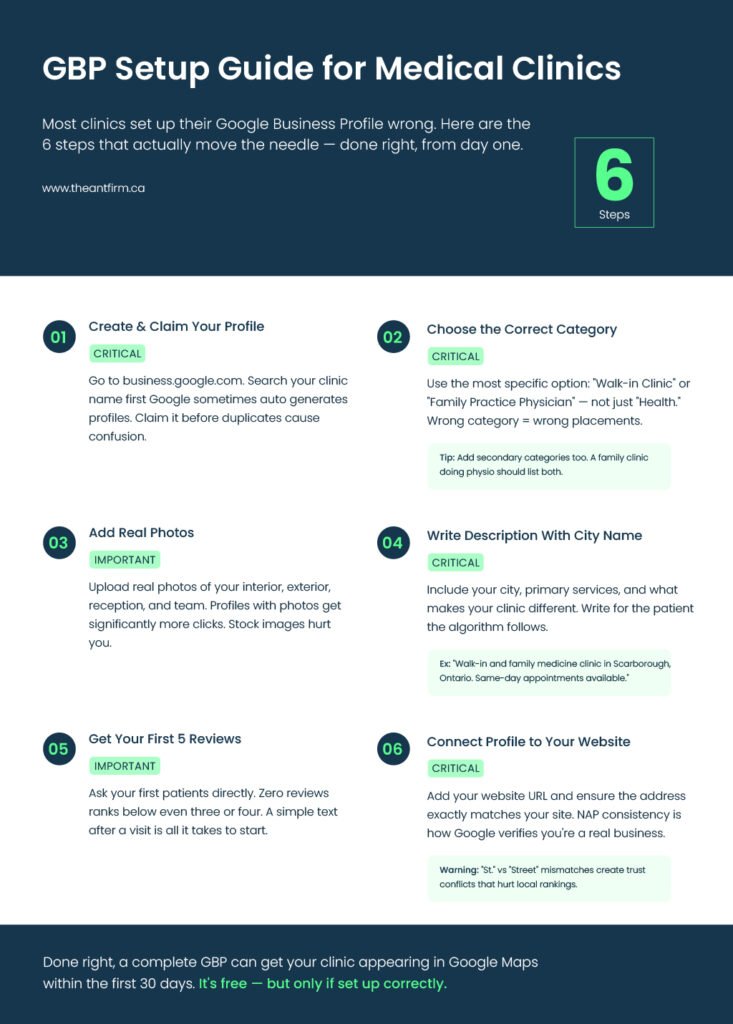
Directories and reviews are crucial. Consistent information across sites like Healthgrades, RateMDs, and Yelp Healthcare improves your healthcare local SEO. Positive reviews boost credibility and increase patient inquiries.
Reviews also influence how patients choose a clinic. Many people read a few reviews before deciding where to book an appointment. A steady flow of honest feedback can make your clinic look more reliable and encourage more people to reach out.
Early reviews play an important role for a new clinic. When your first patients share their experiences online, it shows that your clinic is active and serving the community. Even a small number of genuine reviews can help build trust.
It is also helpful to keep your directory profiles updated. Add accurate clinic hours, services, photos, and contact details. Clear and updated information makes it easier for patients to learn about your clinic and contact you when they need care.
The Role of Educational Content for Medical Clinic Website SEO
Content beyond services builds authority. Blog posts and guides that answer patient questions increase search visibility. Examples include:
- How to choose a family doctor in Toronto
- Understanding walk-in clinic procedures
- Preparing for lab tests
Educational content also helps patients learn before they book an appointment. It answers common concerns and builds trust with new visitors.
At the same time, it supports medical clinic website SEO by helping your site appear for more search queries and showing Google that your clinic shares useful health information.
Role of Tracking and Analytics for Website SEO
Setting up tracking tools early helps you understand how people use your website. It shows what is working well and what needs improvement. When these tools are connected from the start, you can follow visitor activity and make better updates to your site.
- Google Analytics 4 helps you see how many people visit your website and which pages they spend time on.
- Google Search Console shows if your pages are indexed on Google and what search terms bring people to your site.
- Heatmaps show where visitors click and how far they scroll on a page.
These tools also help you spot problems, such as pages people leave quickly or content they ignore. With this information, you can improve your pages, update content, and make your website easier to use.
Common Mistakes to Avoid with Medical Clinic Website SEO
Even with a new website, clinics often make mistakes. So, the mistakes are:
- Expecting instant results
- Ignoring E E A T which means Experience, Expertise, Authority, and Trustworthiness
- Neglecting mobile usability or page speed
- Overlooking local SEO signals like Google Business Profile and citations
- Not creating separate pages for each medical service
- Using very little content on important pages
- Leaving clinic contact details hard to find
- Not updating Google Business Profile with hours, photos, and services
- Ignoring patient reviews and online feedback
- Using large images that slow down the website
FAQ Section
Does a medical clinic need SEO?
Yes. Local SEO ensures patients searching nearby find your clinic first. Without it, competitors gain visibility. Clinic SEO focuses on location and healthcare signals, making it different from general SEO.
Why is my clinic not showing up on Google?
Common reasons: no local SEO setup, website not properly indexed, or Google Business Profile not connected. Each prevents Google from recognizing your clinic as a trusted provider.
What should a medical clinic website include?
Service pages, location information, doctor bios, visible contact details, GBP link, and schema markup. These elements make your site clear to patients and Google.
How long does it take for a clinic website to rank on Google?
With proper SEO from day one, initial rankings appear in 60–120 days. Without a foundation, a website may struggle indefinitely and require significant work.
How do patients find medical clinics online?
Mostly via Google Search, Google Maps, and Google Business Profile. Other platforms like Healthline or RateMDs are secondary. Early visibility in Google is essential.
End Note
In the end, medical clinic website SEO ensures your clinic can be found by patients from day one. Clear service pages, local SEO, and proper technical setup help Google understand your clinic and show it in search results.
A website with accurate information, helpful content, and visible contact details builds trust with patients. Early SEO establishes a strong foundation to attract more patients and grow steadily.
Want This Done Right From Day One?The Ant Firm, LTD, builds local-first clinic websites that rank. Need one? Then contact us today to get the best service ever.