
Have you ever wondered why gym website design matters so much for Canadian gyms today? Many fitness centres still struggle to bring in new members, and one main reason is that people cannot find the information they need online.
A simple and clear website helps visitors learn about your classes, see your schedule, and join without any confusion. In 2026, you need a strong online presence for Canadian gyms to reach more locals and grow.
In this blog, I will talk about why gym website design matters and why 42% of Canadian gyms closed. You will also learn how to design the website to make it work.
Let’s begin the discussion.
Why Did 42% of Canadian Gyms Close?
I know; many people ask, ‘Why did 42% of Canadian gyms close?’ Well, the answer is competition and not having a proper website, so that people learn about the gym. Small and medium-sized gyms mostly face this issue. There are other reasons too.
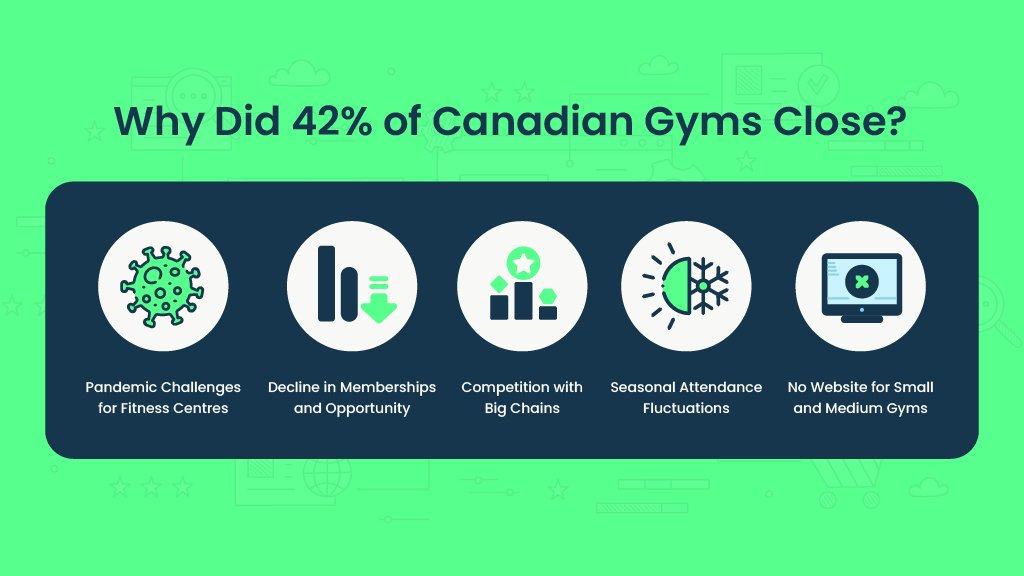
Here, have a look at these reasons to learn why 42% of Canadian gyms are closed.
Pandemic Challenges for Fitness Centres
The pandemic caused long closures for gyms. Many smaller centres could not cover their expenses when memberships dropped. Even after reopening, some gyms never recovered financially.
Decline in Memberships and Opportunity
Before the pandemic, 16% of Canadians had gym memberships. Today, only 11% are active members. Meanwhile, 29% of former gym-goers have no plans to return. This leaves a large group looking for local, convenient fitness options. A well-built website can reach them and convert them into members.
Competition with Big Chains
GoodLife operates over 450 locations with 1.5 million members in Canada. Independent gyms cannot match that scale. However, strategic gym website design with local SEO allows smaller gyms to dominate their neighborhoods. Appearing at the top of searches like “gyms near me, Toronto” captures people who are ready to join.
Seasonal Attendance Fluctuations
Attendance varies by season. Winters in Canada push people indoors, while summer outdoor activities can reduce gym traffic. A website offering online classes, flexible scheduling, and virtual memberships helps maintain engagement year-round.
No Website for Small and Medium Gyms
Many small and medium gyms don’t have a website. Without one, people can’t find their classes, schedules, or membership info. Even good gyms can be overlooked if they’re not online. A basic website with local SEO helps gyms show up in searches, share what they offer, and get more members, helping them compete with bigger gyms.
How Website Design Helps Your Gym Grow
A good website design helps in gym growth in many ways. So, let’s explore how a good gym website design helps in gym growth.
Capture High-Intent Leads
People searching for gyms online are already interested in joining. Unlike general advertising, these visitors have high intent. A well-optimized website captures these leads efficiently.
Mobile Booking Made Easy
Most Canadians search for gyms on mobile devices. A mobile-first website allows visitors to book trial classes or memberships anytime. This reduces missed opportunities and increases sign-ups.
Show Your Services Clearly
Potential members want to know exactly what your gym offers. Highlight programs, class schedules, and pricing. Pages like “HIIT classes Toronto” or “yoga studio Mississauga” improve clarity and search visibility.
Online Payment and Membership Tools
Allowing online payments removes friction for new members. Membership management tools let people register, track progress, and update information without visiting the gym.

Offer Virtual Classes and Seasonal Options
Virtual sessions and flexible schedules keep members engaged even when attendance drops. Offering online workouts during winter or summer ensures your gym stays relevant all year.
Build Local Authority
Showcase your community involvement, events, and member success stories. Local content positions your gym as an authority and builds trust, which encourages more people to join.
Keep Members Engaged
A website integrated with email, SMS, or WhatsApp updates keeps members informed about schedules, promotions, and events. This boosts loyalty and reduces churn.
How to Design a Website for a Gym: Step-by-Step Process
Creating a website for your gym can help attract more members, keep them engaged, and grow your business online.
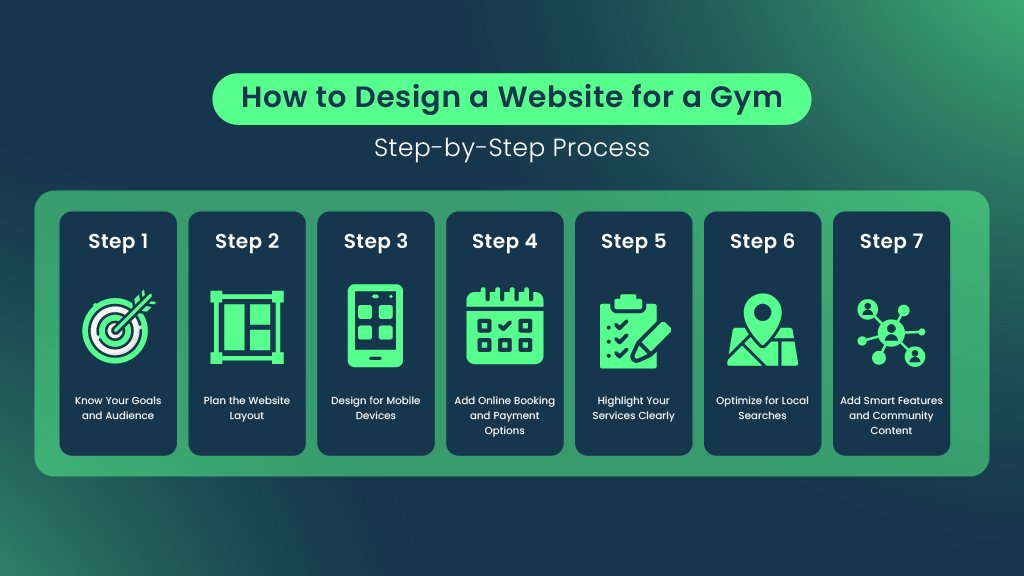
Here is a step-by-step process to build a website that works for both your gym and your visitors.
Step 1: Know Your Goals and Audience
- Decide what you want your website to achieve, such as increasing trial sign-ups, selling memberships, or filling classes.
- Think about who your visitors are. Are they beginners, yoga enthusiasts, or people focused on strength training?
Benefit: Understanding your goals and audience helps you design a website that speaks directly to potential members and encourages them to take action
Step 2: Plan the Website Layout
- Organize your main pages: Home, About, Classes, Membership, and Contact
- Include service-specific or location-specific pages like HIIT Classes Toronto or Yoga Studio Mississauga
Benefit: Clear organization helps visitors find what they need quickly and improves your local search presence
Step 3: Design for Mobile Devices
- Make sure your website loads quickly on phones and tablets
- Keep navigation simple and buttons easy to tap, especially for class bookings
Benefit: Most Canadians search for gyms on mobile devices, so a smooth mobile experience increases the chances they will sign up
Step 4: Add Online Booking and Payment Options
- Let visitors book classes, join trial programs, and pay for memberships online
- Send confirmations and reminders through email, SMS, or messaging apps
Benefit: Making it easy to sign up online removes obstacles and encourages more people to join
Step 5: Highlight Your Services Clearly
- Display class schedules, programs, pricing, and virtual options
- Include images, short videos, and testimonials from members
Benefit: Visitors understand exactly what you offer, which builds trust and motivates them to sign up
Step 6: Optimize for Local Searches
- Use neighborhood-specific keywords and keep your Google Business profile updated
- Provide bilingual content in Quebec to reach both English and French speakers
Benefit: Local search helps attract people who are ready to join a gym nearby, increasing high-quality traffic
Step 7: Add Smart Features and Community Content
- Offer virtual classes, progress tracking, or integrations with fitness devices
- Share member success stories, events, and eco-friendly initiatives
Benefit: These features show your gym is modern, community-focused, and trustworthy, keeping members engaged and coming back
What Makes Gym Websites Different from Other Business Websites
There are many elements that make the gym websites different from other businesses. So, the major elements are:
Service and Location Pages
Gyms need pages highlighting specific services and locations. For example, “personal training Toronto” or “yoga classes Mississauga” helps potential members find exactly what they need.
Online Booking and Trial Signups
A strong gym website design allows visitors to sign up for classes or trial memberships immediately. Reducing friction increases conversion rates.
Mobile-First Design
Around 60% of gym searches happen on mobile. A responsive website ensures smooth navigation, easy access to schedules, and quick booking. Slow sites drive visitors away.
Membership Management and Virtual Classes
Many gym websites include dashboards for members to track progress and join virtual sessions. These features increase satisfaction and retention, which are essential in a competitive market.
Why “Gyms Near Me” Searches Are More Valuable Than Social Media?
A study finds that people mostly search on SERP for ‘gym near me’ instead of using social media. This happens for many reason and we will learn about the reasons here.
High-Intent Visitors
Searches like “gyms near me” come from people ready to join. Unlike social media, these visitors have strong intent. Optimizing your website for these searches captures members immediately.
Mobile-Driven Decisions
Most searches are on mobile, so visitors expect fast-loading websites with easy booking options. Quick actions lead to higher sign-ups.
Local SEO Benefits
Local optimization helps your gym appear in Google map packs and search results. In Quebec, bilingual websites can attract both English- and French-speaking members.
Social Media Is Secondary
Social platforms are good for brand awareness but rarely lead to immediate memberships. Your website should be the main conversion tool.
How Gym Website Design Helps Small Gyms to Beat Large Chains
Have a look at how the gym website design helps small gyms to beat large chains:
Local-First Website Structure
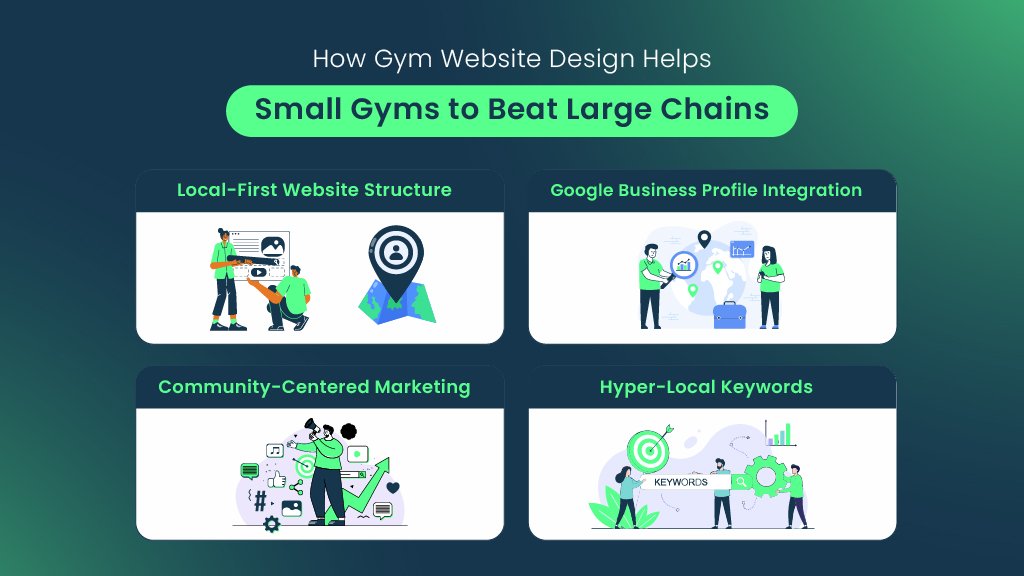
Independent gyms can outperform large chains by creating neighborhood-specific pages. Keywords like “CrossFit gym Mount Pleasant Toronto” or “yoga studio Plateau Montreal” attract nearby members effectively.
Google Business Profile Integration
A well-maintained Google Business Profile works alongside your website to improve visibility in maps and search results. This ensures people looking for gyms find your business first.
Community-Centered Marketing
Emphasize small-group classes, boutique experiences, or specialized training. Content reflecting local culture strengthens engagement and differentiates your gym from chains.
Hyper-Local Keywords
Optimizing for neighborhoods ensures your website ranks for people searching nearby. Content about local communities increases high-quality traffic.
Why Your Gym Website Should Work 24/7
For better lead generation, your gym website should work 24/7. Besides this, there are some other reasons too. So, the reasons are:
Capture Leads Anytime
Many Canadians report a lack of time as a barrier to joining gyms. An always-on website allows visitors to view schedules, book classes, and purchase memberships anytime.
Online Trial Booking
Websites with trial booking systems increase conversions by up to 35 percent. Visitors can sign up instantly without calling, reducing friction.
Manage Seasonal Attendance
Websites supporting virtual classes and flexible schedules help gyms maintain engagement during winter or summer.
Offer Convenience for Members
A 24/7 website makes it easier for members to access schedules, track progress, and manage bookings. Convenience improves satisfaction and retention.
3 Pillars of a High-Converting Gym Website Design
Let’s learn about the 3 pillar of a high-converting gym website design
Local-Focused Structure
Pages optimized for local search capture high-intent visitors and make your website local-first wesite. Service and neighborhood pages help members find what they need faster.
SEO-Ready Foundation
Fast loading speed, mobile optimization, and clean website design are crucial — every one-second delay can reduce conversions by 7%. If your gym’s current site is falling short here, working with a toronto web design agency that builds SEO-ready from day one solves this at the foundation instead of patching it after launch.
Read Why “Pretty” Websites Don’t Rank Without SEO
Marketing-Ready Integration
Your website should connect with email campaigns, online ads, and social media without a redesign. This helps convert visitors efficiently and increase ROI.
How to Evaluate Your Current Gym Website Design
You can evaluate your current gym website design by following the given instructions below:
Search Engine Performance
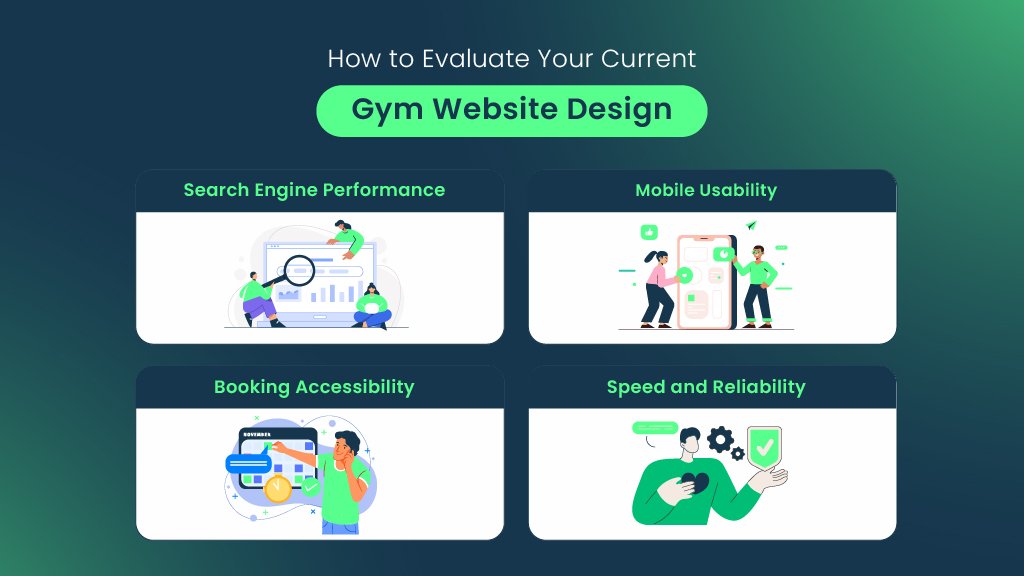
Check if your website ranks for searches like “[service] near me”. If not, competitors are taking your potential members.
Mobile Usability
Ensure the website works smoothly on phones. Navigation, visible booking buttons, and clear schedules increase conversions.
Booking Accessibility
Visitors should be able to book classes or memberships anytime. Limiting access to business hours loses leads.
Speed and Reliability
Your website should load in under three seconds. Every second counts for retaining visitors and converting them into members.
Canadian Gym Website Design Best Practices
The best practices for Canadian gym website design are:
Winter-Focused Programs
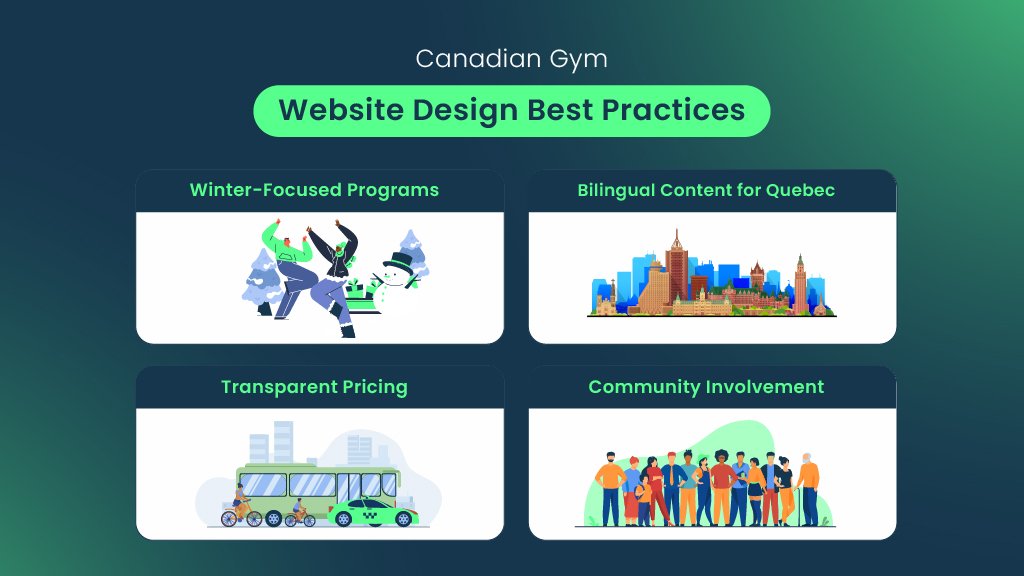
Promote indoor classes, virtual sessions, and seasonal challenges to attract members during cold months.
Bilingual Content for Quebec
Provide English and French content to improve reach and local SEO. Members are more likely to join when they can access content in their preferred language.
Transparent Pricing
Clearly display pricing to compete with budget gyms like Fit4Less and Éconofitness. Transparent costs build trust and reduce barriers to joining.
Community Involvement
Show testimonials, success stories, and local events. Community-driven content resonates with Canadians and encourages loyalty.
How to Use Smart Technology to Make Your Gym Website Work Better
Many Canadian gyms now use simple smart tools to make their websites more helpful for members. A good gym website design can connect with fitness trackers, show workout progress, and share personal tips online. People can sync their smartwatches to check their goals, log exercises, and see their weekly results.
Some gyms also add chat options on their sites so visitors can ask quick questions about classes or membership. This saves time for the team and keeps people interested.
Adding these smart features also helps the site rank better on Google because the content is useful and interactive. Smaller gyms can compete with bigger chains and offer a modern, engaging experience that members enjoy.
Top 5 Ways to Make Your Website Personal for Each Visitor
Let’s learn the top 5 ways to make your website personal for each visitor:
1. Show Location-Based Content
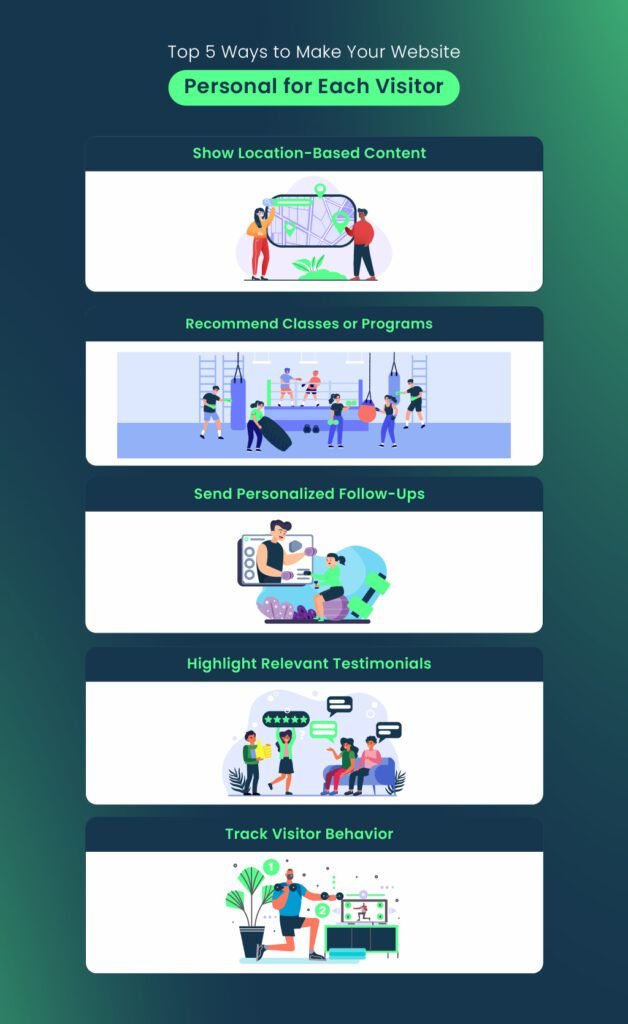
Make your website useful by showing content based on where visitors are. Display local classes, trainers, and reviews so people can find options near them quickly.
For example, someone in Toronto could see nearby yoga sessions, while a visitor in Montreal could find strength training classes close by. This helps visitors feel connected and makes it easier for them to join.
2. Recommend Classes or Programs
Suggest classes or programs based on what visitors are interested in. If they look at HIIT workouts, show personal training or small group options. If they search for yoga, highlight beginner or advanced sessions.
Giving helpful suggestions makes your website easy to use and enjoyable. Adding these features to your gym website design improves the overall experience.
3. Send Personalized Follow-Ups
After someone signs up for a trial class or downloads info, send emails or text reminders about classes, offers, or tips. This keeps visitors interested and encourages them to take the next step toward joining.
4. Highlight Relevant Testimonials
Show success stories from members with similar goals or from the same area. Reading about real results helps visitors trust your gym and imagine themselves achieving similar results.
5. Track Visitor Behavior
Pay attention to which pages or programs visitors click on the most. Use this information to make your website better, highlight popular classes, and make it easier for people to find what they want. A good gym website design that tracks behavior helps turn visitors into happy members.
How Your Gym Can Build a Strong Community Online
Canadians like businesses that care about their community. A gym website design that highlights local activities can attract members who share these values.
The website can highlight charity events, community challenges, and partnerships with local schools. Member stories and instructor introductions help visitors feel welcome before they visit. Seasonal events like winter challenges or summer outdoor activities can also be promoted to encourage participation.
Eco-friendly practices, such as digital membership cards, online receipts, and virtual classes, show that the gym cares about the community and the environment. A gym website design that focuses on the community keeps members engaged and loyal.
End Note
Finally, a website is now essential for any gym, especially with so many centres closing and fewer Canadians keeping memberships. Small gyms can still grow if people in the community can easily find them online.
A good gym website design that supports local search, works well on phones, and makes booking simple can help bring in more members.
The gyms that stayed open in recent years had one thing in common: a website that reached local people. A local-first website could do the same for your gym.