
Are you not satisfied with your restaurant website design in Toronto? Does it have poor local visibility, slow mobile performance, confusing menus, and missing location pages? Well, it’s high time to fix these issues and design it again to make it local-first and SEO-friendly.
A well-structured restaurant website design ensures your business appears in local searches, provides a smooth experience on phones, and helps attract more customers to grow your restaurant. So, what should you include and what not in your restaurant website design?
You will get the answer here in this blog. I will talk about how to make your site easy for customers and SEO-friendly and update it properly. You will also see common mistakes to avoid. By the end, you will know how to get your Toronto restaurant found online.
Let’s begin the discussion.
Why Don’t Most Restaurant Websites Work?
Many sites around Ontario look stylish, use full-screen images, and show off the menu nicely, yet they remain invisible online. This usually leads to frustration because owners invest time and money into something meant to help them grow.
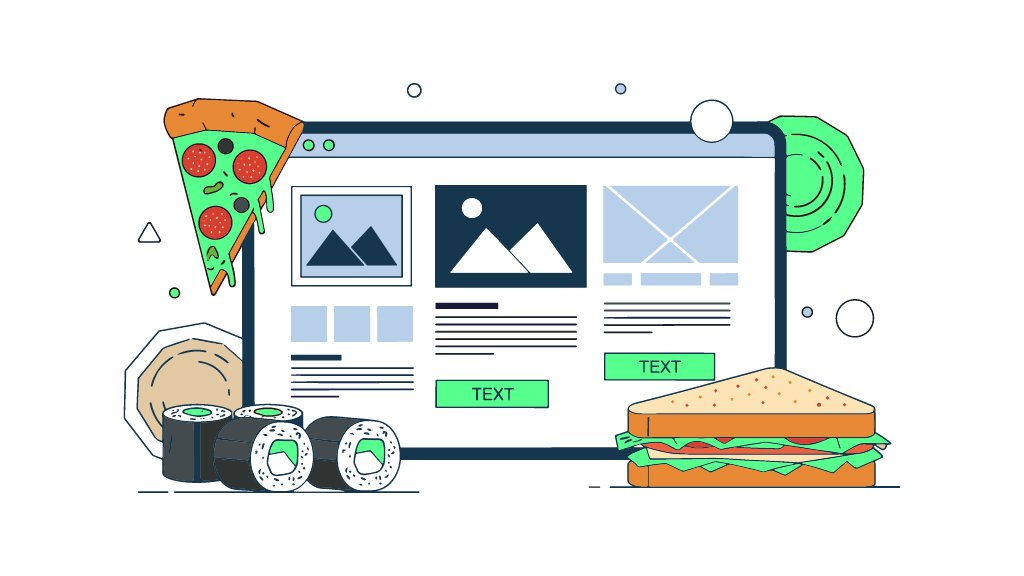
The reality that restaurant owners deal with
Restaurants often spend $2,000 to $5,000 on a visually appealing website. The pages look polished, the images feel premium, and everything works on the surface. Yet:
- They don’t show up in local search
- Competitors with outdated or less attractive websites appear on the first page
- Customers struggle to find key details
- Owners end up paying for redesigns or new “SEO upgrades” every year
It’s stressful and expensive. And the worst part? Many people assume the website simply “failed”, when the real problem began with the structure.
Why A Website’s Structure Matters More Than Design
You need a proper structure for your restaurant website. It matters the most, as based on the structure, you will work on the design.
Let’s explore the reasons why a website’s structure matters more than design:
1. Local-first structure
A restaurant website design places structure before visuals. This structure tells Google where you operate, who you serve, and what kind of searches your restaurant should show up for.
Restaurant owners often assume a homepage can rank for everything, such as city, neighbourhood, food type, reservations, ordering, and catering. It can’t. Google divides these into different search intents, and each intent needs a dedicated page to match it.
Google looks for clear location signals
Imagine someone in Etobicoke searches “Thai restaurant near me.” Google needs to confirm:
- You serve that neighbourhood
- You have a physical address or service area
- Your website explains where you’re located
- Your business information matches your Google Business Profile
If your restaurant website design doesn’t provide these signals, Google simply shows another restaurant.
A homepage alone can’t rank for every city
This is especially important for restaurants with:
- Two or more locations
- A main location and a ghost-kitchen location
- A dine-in location plus catering or delivery area
Each location needs its own page because customers search differently in each area. Someone in North York won’t see the results meant for customers in Downtown Toronto.
City-based pages help your restaurant appear in local results
A local-first website design for a restaurant includes:
- A homepage for your brand
- A location page for each physical address
- A service-area page for delivery/catering (if relevant)
- A menu page
- Pages for reservations, online orders, or special services
This structure doesn’t just help rankings. It makes your restaurant visible across multiple neighbourhoods.
2. SEO-ready foundation
Many owners ask if SEO can be added later. Technically, yes. Practically, it leads to more cost because the website was never built to support it.
To build the foundation, you need:
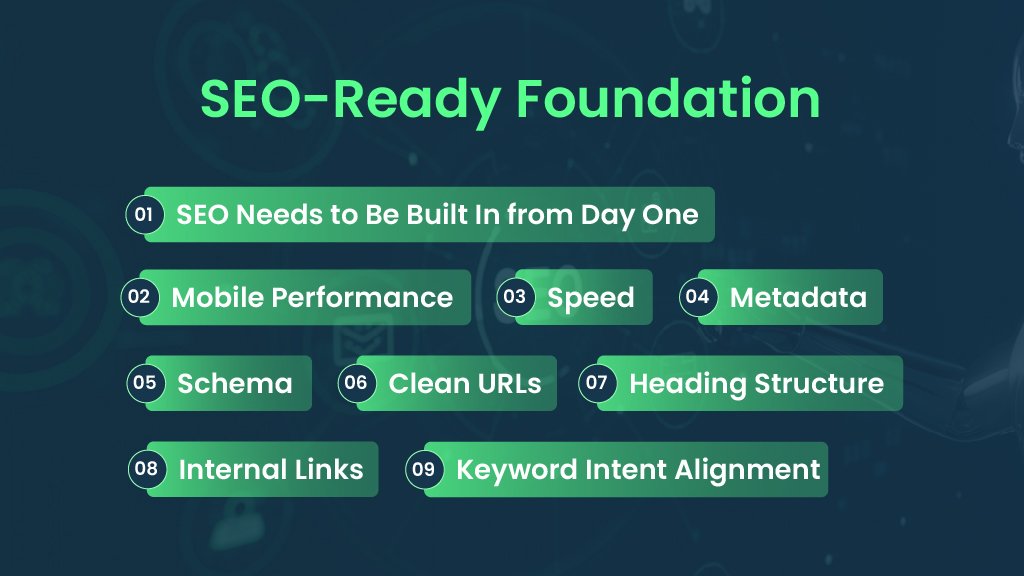
SEO needs to be built in from day one
Think of it like laying plumbing before building a kitchen. Without the internal system, the kitchen looks nice but doesn’t work. A proper SEO-ready restaurant website design includes:
Mobile performance
Most customers browse your site while walking, commuting, or sitting in a parking lot. With 70–80% of traffic coming from mobile, your site must load quickly, respond smoothly, and offer clear navigation.
Speed
Every extra second of loading hurts trust. Diners leave slow websites quickly. That makes Google lower your visibility.
Metadata
These background signals tell Google what each page is about. Without strong metadata, Google treats your website like a blank notebook.
Schema
Restaurants benefit from structured data like:
- Opening hours
- Menu markup
- Reviews
- Address
- Cuisine type
- Reservation links
Schema helps Google understand your business instantly.
Clean URLs
Instead of “/page123”, your site needs readable URLs such as “/menu”, “/scarborough-location”, or “/catering-toronto”. ”.
Heading structure
Google reads headings like a table of contents. If headings are messy or missing, Google gets confused.
Internal links
These guide Google and customers toward important pages. Without internal links, visibility drops because pages become disconnected.
Keyword intent alignment
This means your page matches what people search for. Someone searching for “Indian restaurant in Brampton” wants options nearby. Your page must answer this directly.
3. Marketing-ready restaurant website
Restaurant website design doesn’t end with visibility. The site needs to support marketing efforts that bring customers back.
Ads amplify structure—they don’t fix it
A weak structure can’t support ads. You may spend money on Google Ads or Facebook promotions, but the results stay low because the foundation isn’t strong. That’s why many owners feel their ad money disappears without return.
Your website must be ready to scale
A strong structure supports:
- Online ordering
- Seasonal promotions
- Catering services
- Multiple locations
- Delivery partnerships
- Reservations
- Social media traffic
- Google Ads and Meta Ads
When a site is organized correctly, you don’t need to rebuild it every time the business grows.
Support for online ordering
Digital ordering in Canada now grows 300% faster than dine-in. Customers expect:
- Quick access to the menu
- Smooth ordering
- No confusion on fees or pickup instructions
A marketing-ready website supports this without sending customers to multiple pages.
Conversion-focused design
Clear buttons matter:
- “Order Now”
- “Book a Table”
- “Call Now”
- “Find Us”
Customers shouldn’t need to search for these actions.
Scaling without rebuilding
When you add a new location or service, a structured website grows with you. You won’t spend thousands each time your restaurant expands.
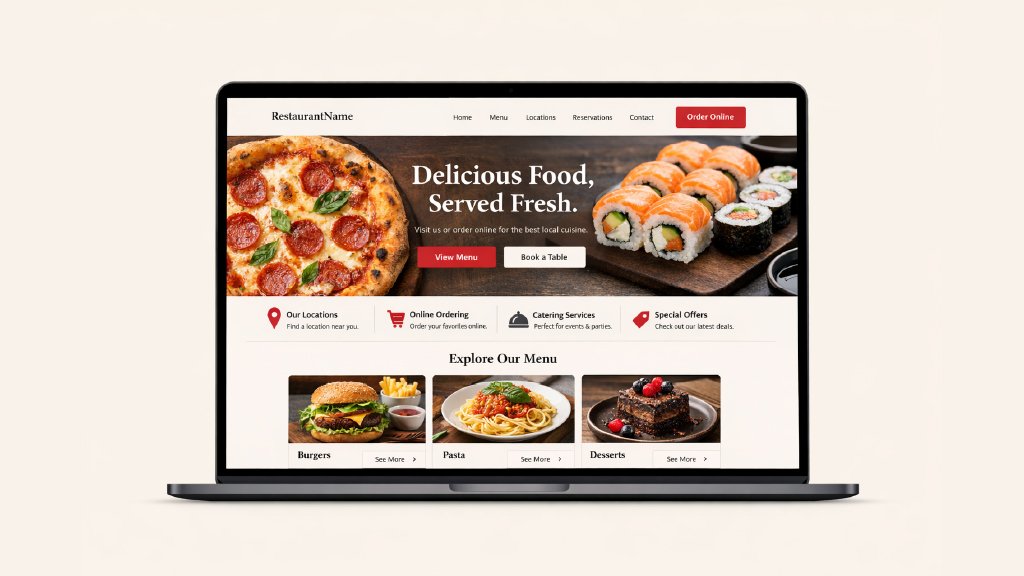
What Makes a Restaurant Website SEO-optimized?
Have a look at what an SEO-ready website actually includes:
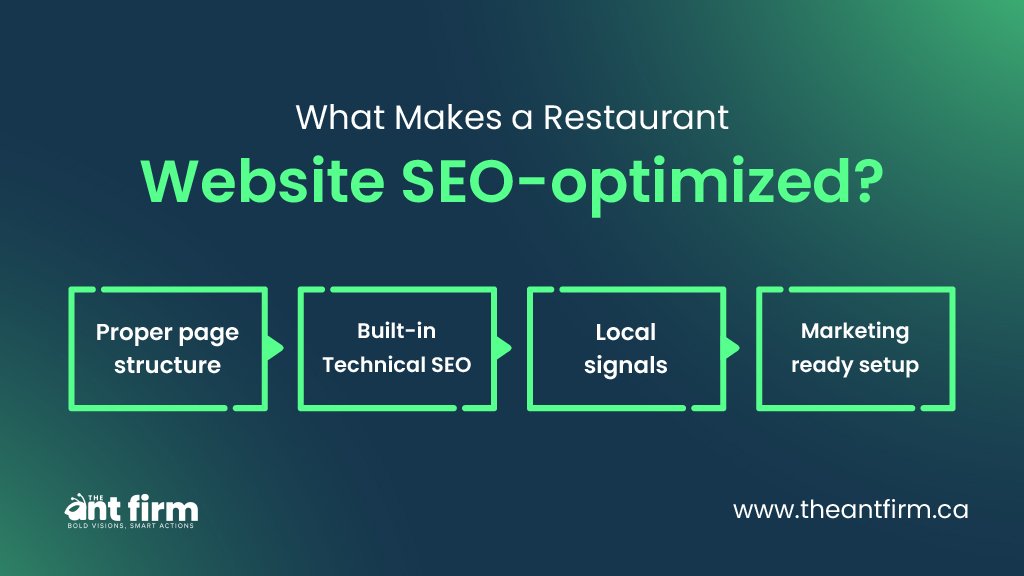
Proper page structure
Restaurants need more than a homepage and menu. Pages should be organized to match how customers search.
Built-in technical SEO
Speed, mobile responsiveness, schema, metadata, headings, and internal links must already be in place.
Local signals
Google wants clarity about:
- Name
- Address
- Phone
- Operating hours
- Service area
- Menu offerings
These signals help both Maps and Search.
Marketing-ready setup
A complete restaurant website design includes:
- Clean URLs
- CTAs
- Tracking tools
- Google Analytics setup
- Tag Manager
- Support for ads
- Clear service and menu categories
Keeping Your Restaurant Website Design Up to Date
After the website is complete, you can’t stop updating the design. You should keep your restaurant website design up to date to get online recognition.
So, ensure that you do the following:
Update Menus and Hours
Changing menus regularly and keeping hours correct helps both visitors and search engines. Adding new dishes or seasonal specials encourages people to check the site more often.
Share Offers and Local Events
Posting updates about promotions, chef specials, or local events keeps the website interesting. Fresh content encourages people to visit again and shows that the restaurant is active in the community.

Make Restaurant Website Design Easy for Customers
Ensure that your restaurant website design is clean and easy to use for the customer. When a customer finds the website is easy to use, they stay for a long time, purchase food and then keep coming back.
Let’s see how you can make website design easy for customers.
Make Menus Simple to Read
Divide menus into clear sections with descriptions and pictures of dishes. Make sure it is easy for someone on a phone or tablet to see everything without scrolling too much.
Show Action Buttons Clearly
Buttons like “Order Now”, “Book a Table”, or “Call for Pickup” should be easy to spot. Keep them in places people can see right away to encourage them to take action.
Make the Site Fast and Easy on Phones
A website that loads quickly and works well on all devices keeps people from leaving. Simple steps for ordering or booking make the experience smooth and enjoyable.
Common Mistakes to Avoid in Restaurant Website Design
Here is a list of common mistakes that you should avoid in restaurant website design:
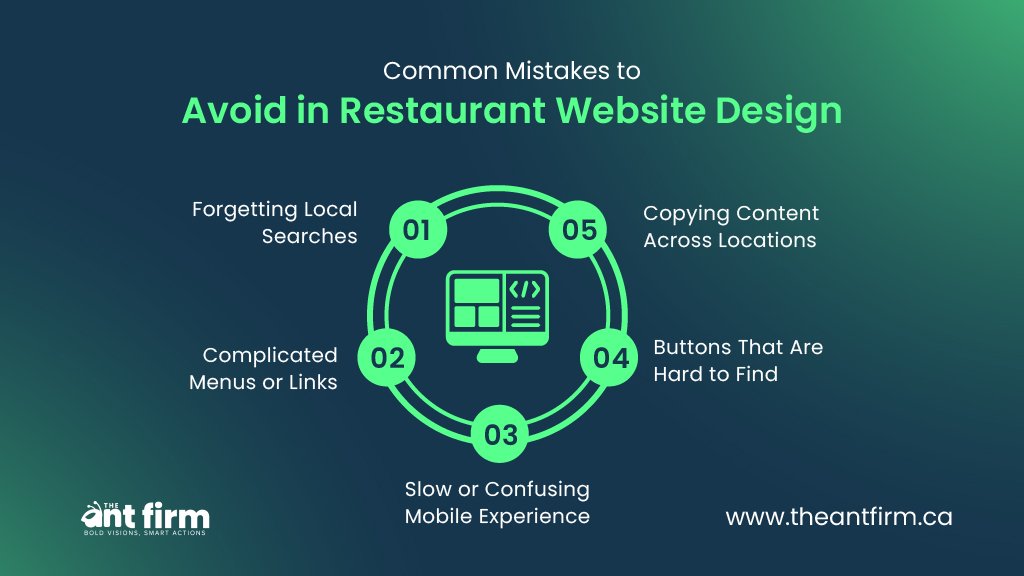
Forgetting Local Searches
Not adding neighborhood names or city details can make the restaurant invisible to nearby customers. Each location should have its own page with unique information.
Complicated Menus or Links
Too many links or hidden pages can confuse visitors. Keep everything easy to find and simple to use.
Slow or Confusing Mobile Experience
Most people browse on phones. Slow loading, small buttons, or pages that do not adjust to different screens will make potential customers leave.
Buttons That Are Hard to Find
If it is not obvious how to order, book a table, or call, people may leave without taking action. Make buttons clear and easy to click.
Copying Content Across Locations
Using the same descriptions or menus for multiple locations can lower search visibility. Each location should have its own text and images to make it different from the others.
FAQs
What’s the difference between a brochure website and an SEO-ready restaurant website?
A brochure site looks nice, but doesn’t help you get found. An SEO-ready site is built with search behaviour, structure, and visibility in mind. It matches how people search and how Google indexes restaurant websites.
Can’t I just add SEO to my existing website?
You can add a few improvements, but if the structure is weak, you’ll continue running into problems. Most brochure sites weren’t built for rankings.
Do I need different pages for each location?
Yes. Google sees each location as a separate entity. A single homepage can’t represent Toronto, Scarborough, and Mississauga at the same time.
How long does it take to see results from an SEO-optimized restaurant website?
Most restaurants see movement within a few weeks and stability within a few months. Visibility grows faster when the structure is strong from day one.
What if my website is on a builder like Wix or Squarespace?
These can work if structured properly, but many restaurant templates on those platforms are designed for appearance. If you’re stuck, rebuilding may be more affordable than trying to fix everything.
Why Restaurants Need A Website Built for Visibility
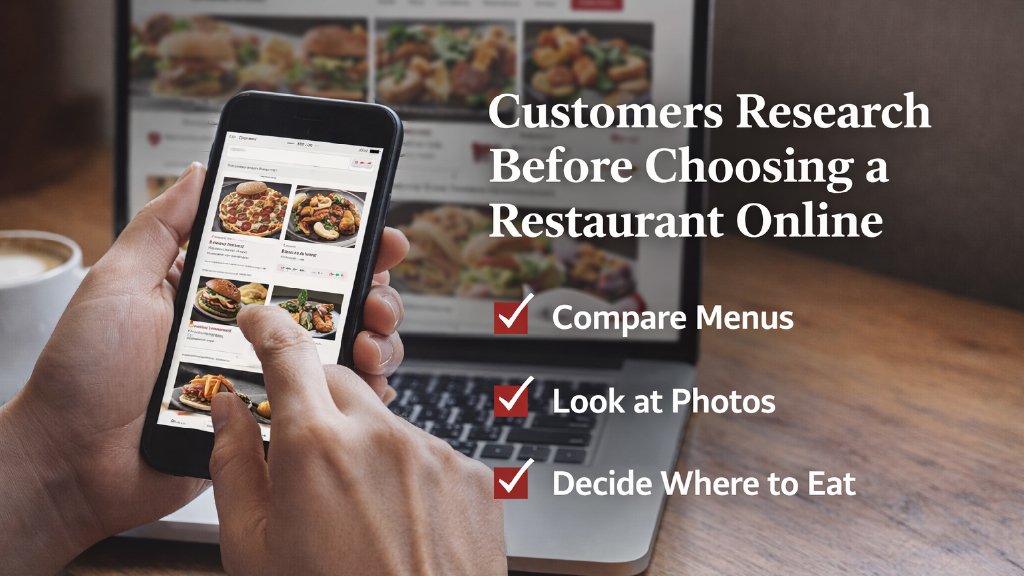
Restaurant website design has changed quickly in Canada. Customers research before stepping out. They compare menus, look at images, and decide based on online information. Without a strong site, you lose those customers before they even see what you offer.
When someone asks, “Do restaurants need a website?” the answer becomes clear once you look at behaviour in Ontario. Diners treat your website like part of your hospitality experience. If it feels confusing, outdated, or slow, they assume the restaurant is too.
A restaurant website also protects your reputation. Third-party listings show limited information and may not update correctly. Your own site ensures accurate hours, menu changes, and pricing.
The demand for strong restaurant online visibility rises every year, especially in busy areas like Toronto, where competition is high. A well-structured site helps you show up in Google Maps, standard search, and mobile search results. Combined with restaurant local SEO, you begin appearing in the searches that matter most:
- “pizza near me”
- “best brunch in Toronto”
- “Indian restaurant Scarborough”
- “taco restaurant for pickup”
End Note
In the end, for a better online presence, you must work on making your restaurant website design clean and better. Prepare a good structure and then design it accordingly; this leads the project.
Remember, a well-structured and designed website helps your site get found, match local intent, appear on Google Maps, support mobile users, and prepare your restaurant for long-term success.
For a local-first and SEO-ready restaurant website, if you need help, then The Ant Firm, LTD, can help you get more customers online.